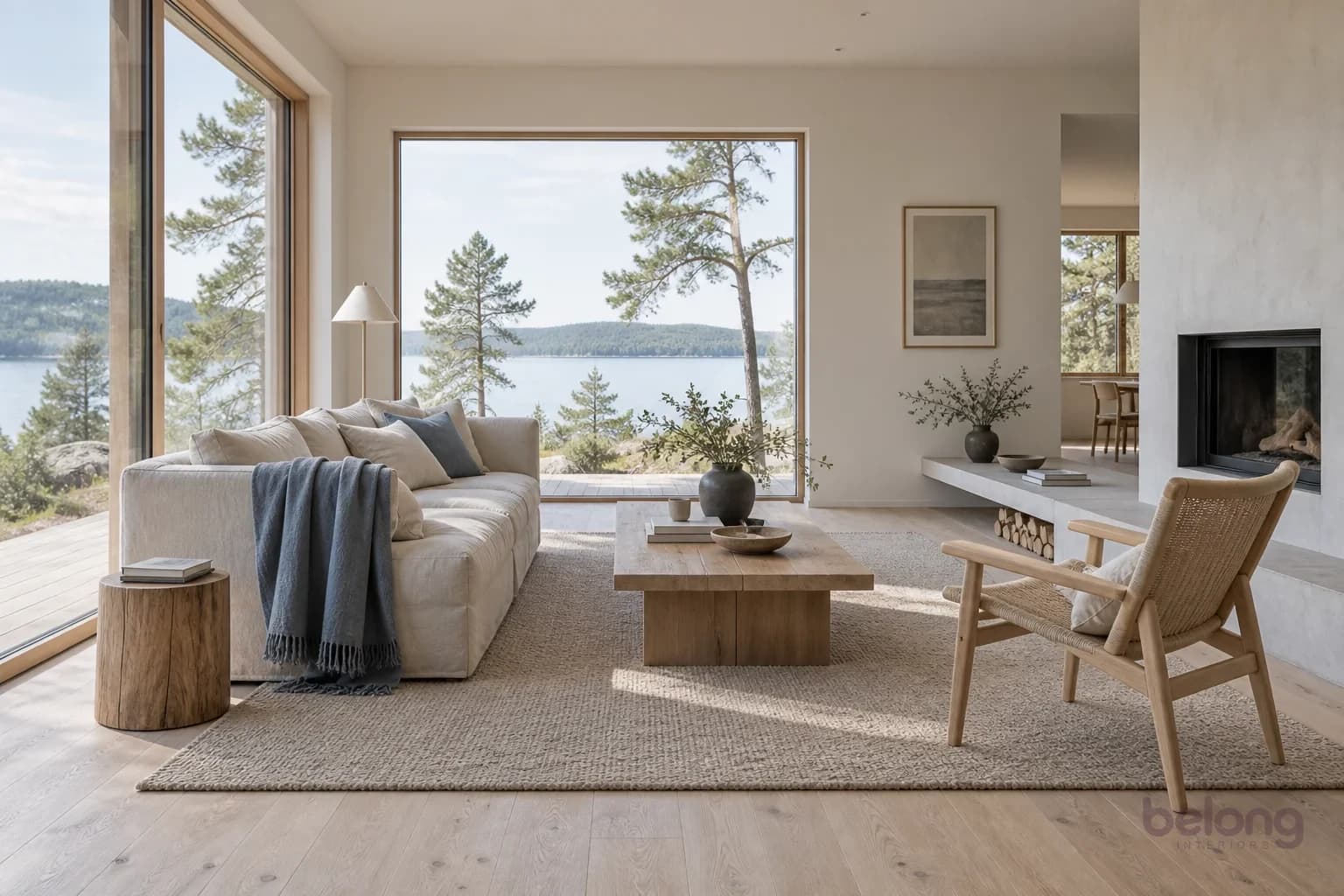
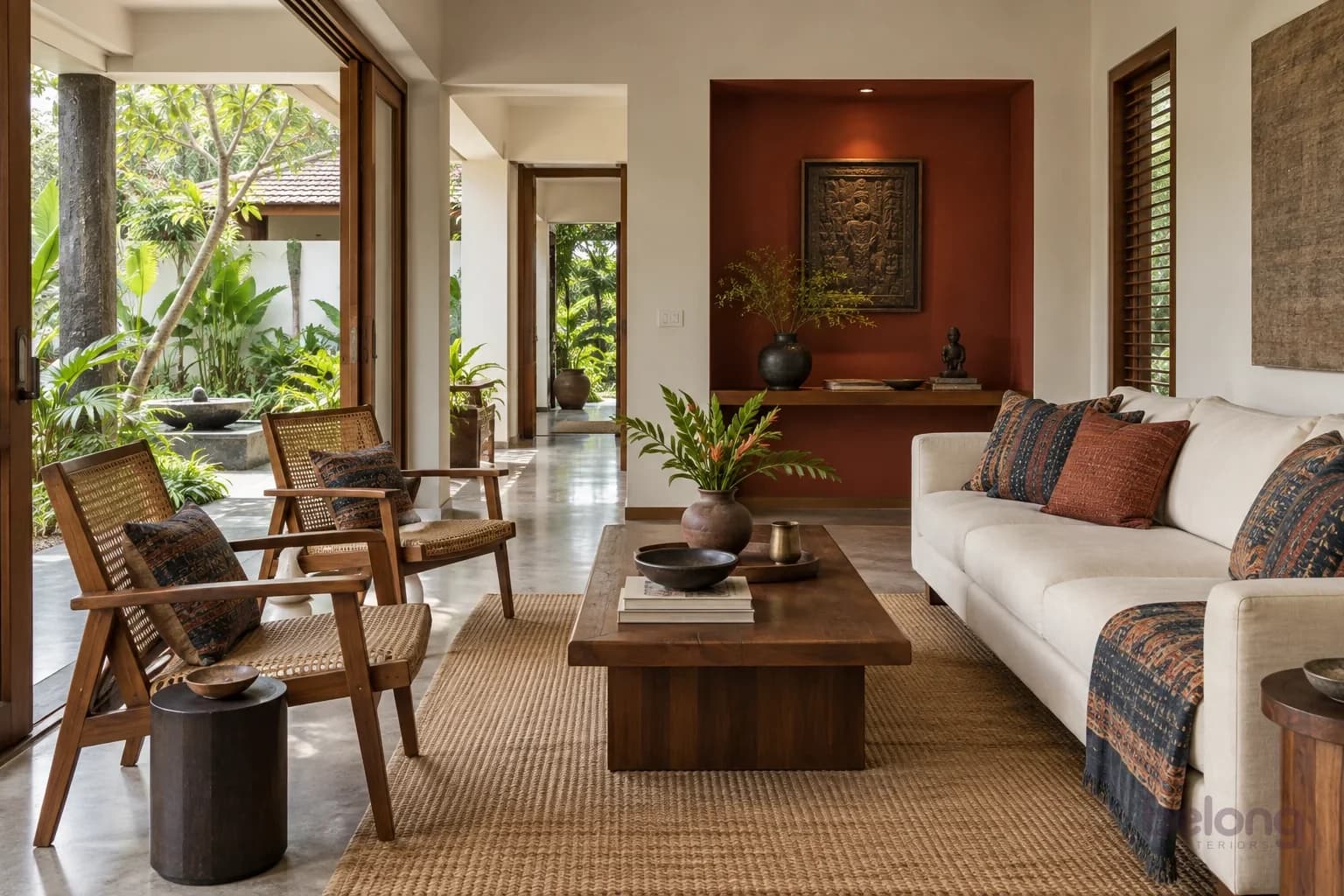
The soft turn. Why curves are everywhere in interiors.
Sofas like clouds, mirrors like pills, doorways that rise into arches: curves are everywhere in interiors right now. Here is what the trend really is, why soft shapes feel so good, where they come from and how to bring them home in a way you will still love when the moment moves on.
What the curvy interior design trend really is
The curvy trend is a change of outline more than a change of style. Corners round off, sofas curl into crescents, coffee tables grow into ovals and doorways rise into arches. You see it in pebble-like armchairs, pill-shaped mirrors, scalloped headboards, globe lights and kitchen islands with softly rounded ends.
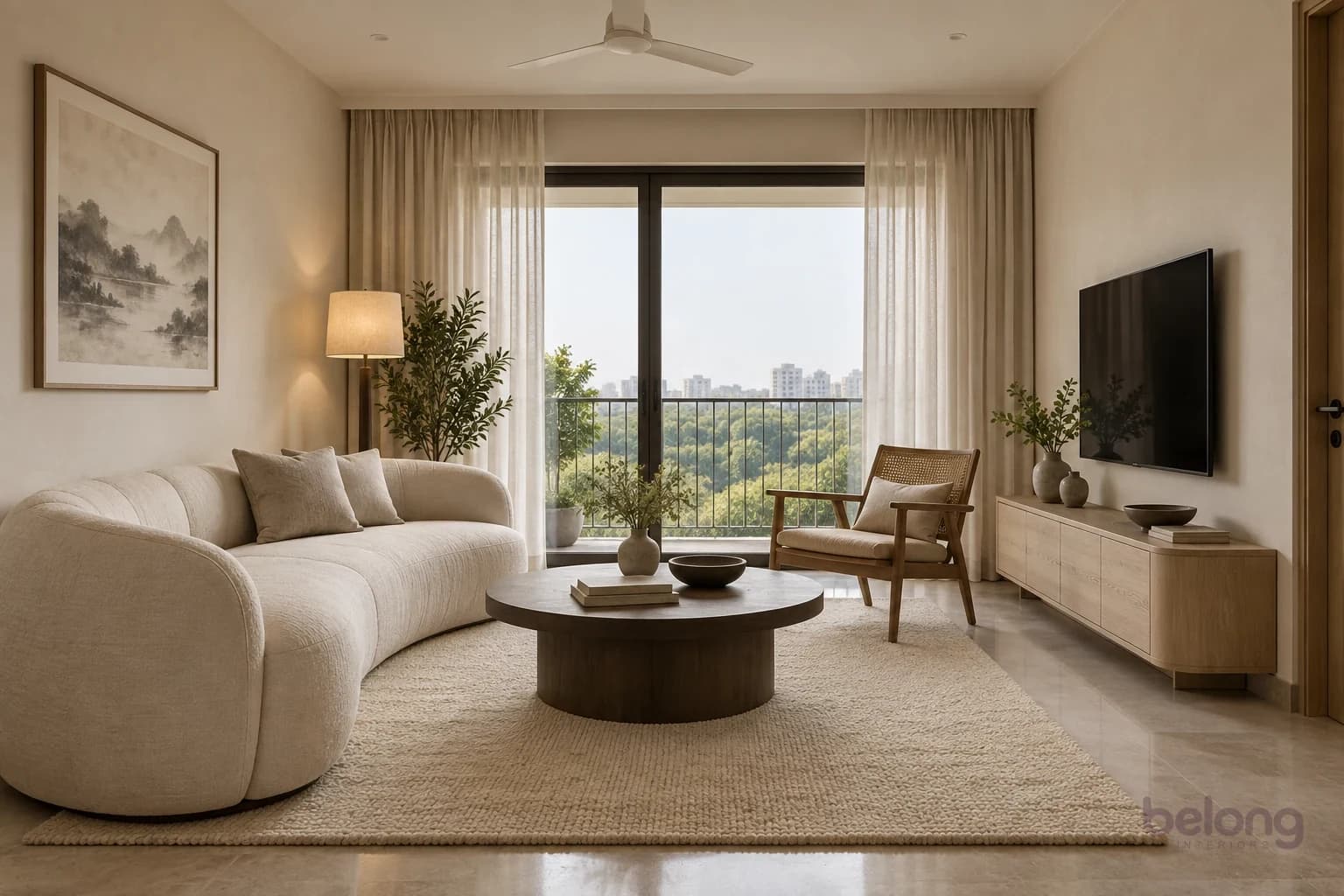
Because it is about shape, it sits happily inside almost any look. A Japandi room might have one low, rounded sofa in oatmeal linen. A modern Indian home might arch a pooja niche or a passage. A room that leans towards Art Deco might choose a curved bar cabinet and a sunburst mirror. The colours and materials change. The softness stays.
It also arrived alongside a wider wish for homes that feel comforting rather than showy. Plenty of us have lived with rooms that look impressive but feel stiff, all crisp boxes and hard corners. Rounded furniture answers that quietly. It looks friendly, it invites you to sit, and it makes a room feel a little kinder.
You will find it under many names: curvy interiors, rounded furniture, organic modern, soft minimalism. The labels change from season to season. The idea underneath stays steady: fewer hard edges, and more shapes that feel easy to live with.
The softness dial
Drag from sharp to soft and watch one room change its mind. The doorway turns into an arch, the mirror into a pill and the table into an oval.
A family of curves. Calm, welcoming and still grown-up.
Why rounded shapes feel so good
Part of it seems to be instinct. In a well-known study, people shown pairs of everyday objects tended to like the versions with curved contours more than the ones with sharp angles. The researchers suggested that sharp angles may carry a faint sense of threat, even when we are not aware of noticing them.
Rooms appear to work in a similar way. In a later study of architectural interiors, people were more likely to call curvy rooms beautiful than rooms made of straight lines. It is a modest finding, not a rule, but it matches what many of us feel when we walk into a room with a round table and a soft, low sofa.
There is everyday comfort in it too. A rounded corner is gentler on a hip as you squeeze past with a tray of tea. A curved sofa turns people towards each other, which is lovely when relatives visit and the conversation runs late. An arch frames a view or a lamp-lit corner the way cupped hands frame a diya.
None of this makes straight lines the enemy. Straight lines get things done; curves invite you to stay. A home needs both, each in the right place, and finding that balance is most of the fun.
Straight lines get things done; curves invite you to stay.
How far to take the curvy look
Think of curves as a dial rather than a switch. At the gentle end sits a single soft piece in an otherwise straight room: an oval coffee table, a round mirror, a sofa with rounded arms. In the middle is a small family of curves that echo one another. At the far end is the fully soft room, where walls, openings and furniture all bend.
Most homes feel happiest somewhere in the middle. Choose one leading curve, usually the largest thing you sit on or look at, then repeat its shape two or three times at smaller sizes: a rounded rug, a pill mirror, a globe lamp. Echoes make a room feel designed. Too many unrelated shapes make it feel busy.
Colour changes how loud a curve feels. A cream sofa reads calm even when it is very round; the same shape in hot orange becomes the star of the room. If you want lots of curves, keep the palette quiet. If you want one bold curve, let it have the colour.
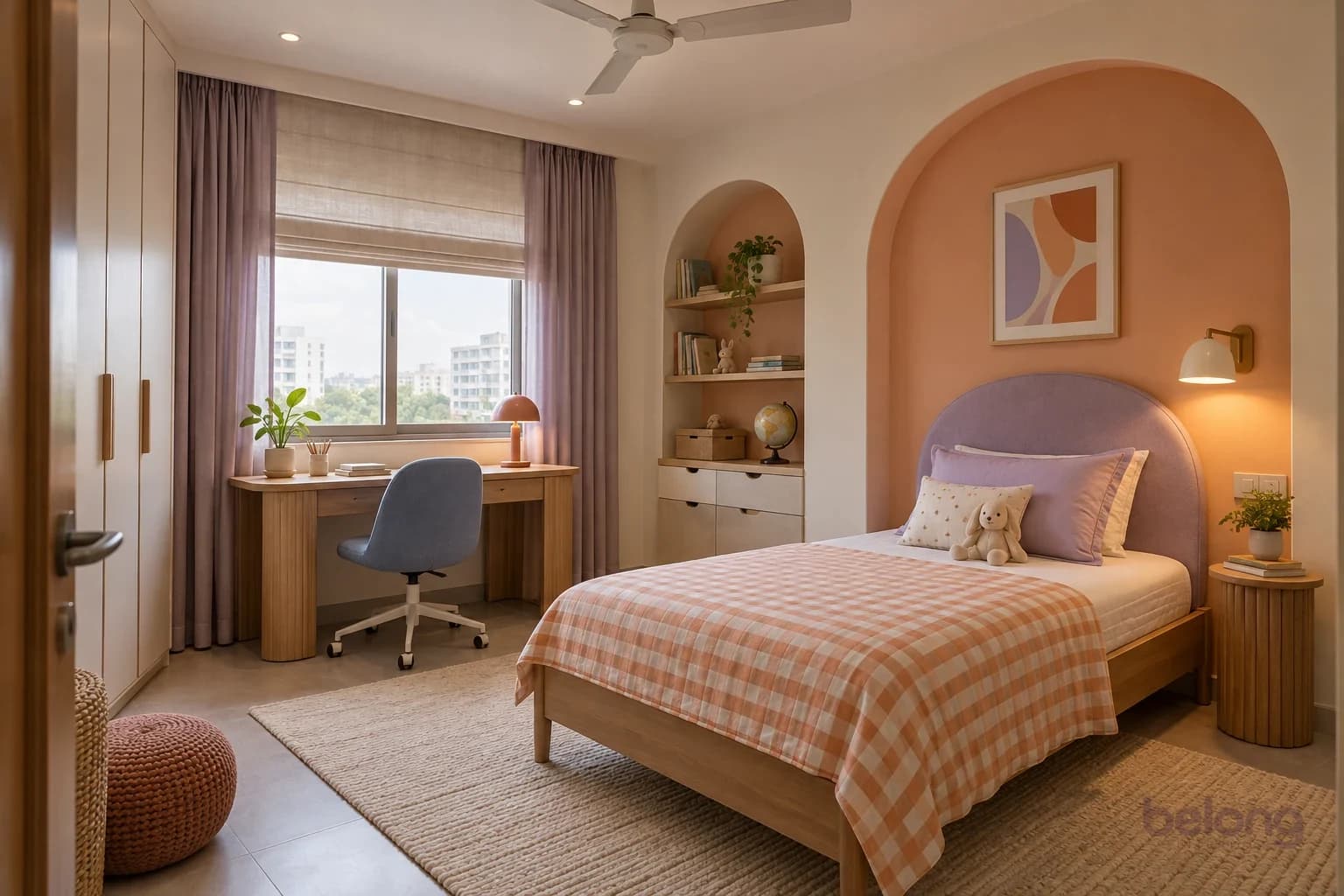
Go further where the mood allows. A child’s room, a reading nook or a guest bathroom can take scallops and arches with real joy. A busy kitchen or a work corner usually prefers calmer lines, with a rounded end or edge only where you pass most often.
The shapes to know: arches, pills, scallops and more
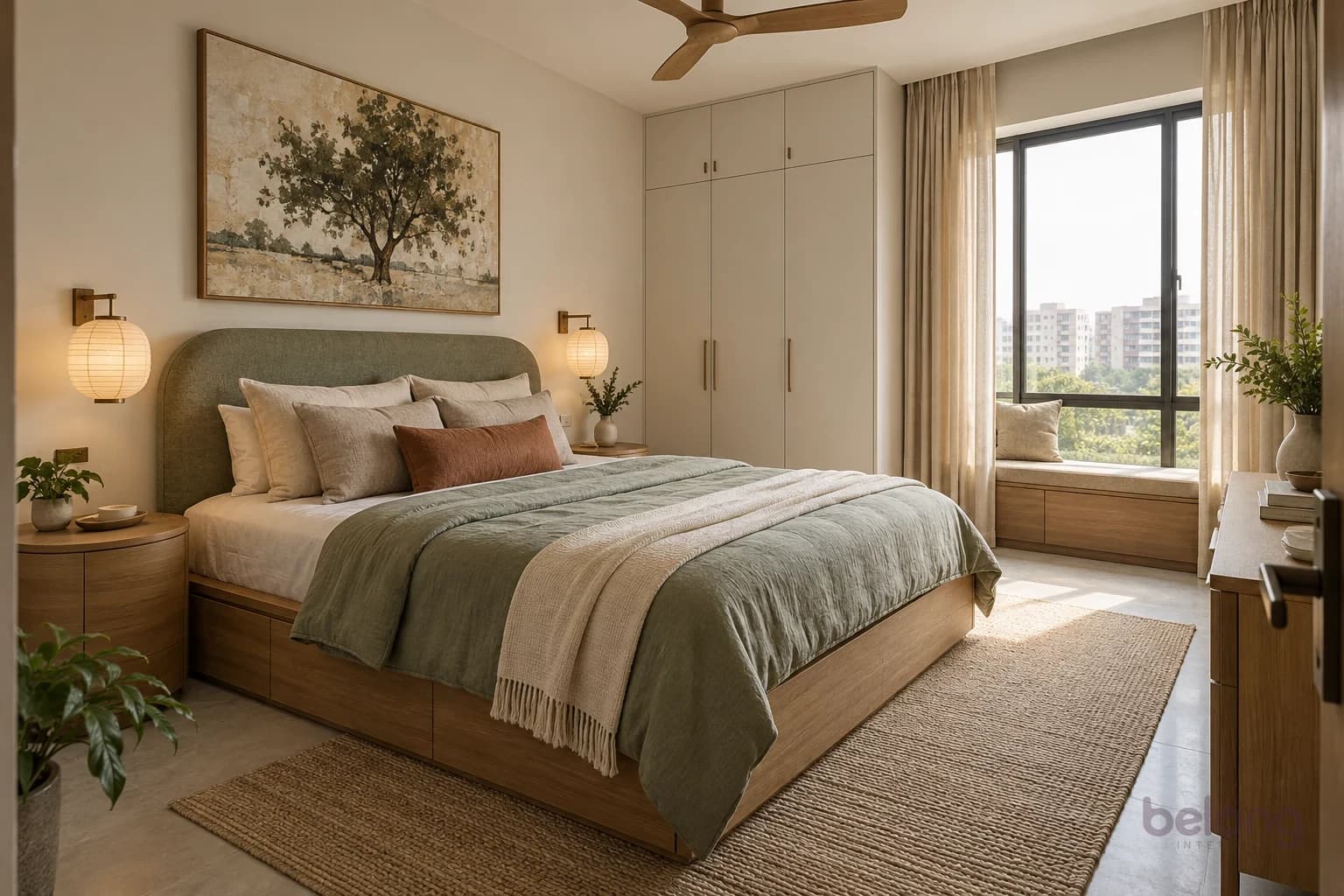
Curves have a vocabulary, and knowing the names makes it much easier to shop, save references and explain what you want. Most curvy rooms mix three families: flat outlines like arches, pills and scallops; soft volumes like globes, pebble chairs and rounded sofas; and edges, from a gentle radius on a cabinet corner to a full bullnose on a tabletop.
Then there are textures that suggest a curve without changing the outline. Fluted and reeded surfaces repeat narrow rounded ribs, so even a straight sideboard catches the light softly. Cane, rattan and woven seats do something similar at a smaller scale. They are handy when a room cannot take another rounded silhouette but still feels a little hard.
Fabric plays along. Bouclé, the nubbly fabric woven from looped yarn, makes a round chair look even softer and has become the trend’s signature texture. It is lovely to touch, but the loops can snag on claws, buckles and toys, so busy homes may prefer a tighter weave or a cover that comes off for washing.
Once you can name them, you start spotting curves you already own: a round steel dabba, the arched top of an old almirah mirror, the rounded lip of a stone step. Everyday shapes like these are a good place to begin, because they already feel like home.
A field guide to curves
Eight shapes worth knowing by name. Tap a card to see where each one shines and what it loves to sit beside.
- ArchA rectangle with a rounded top.ArchTry itDoorways, wall niches, a painted shape behind the bed.Lovely withLime-washed walls and a warm wall light.
- PillLong and straight, with fully rounded ends.PillTry itMirrors, headboards, cabinet pulls.Lovely withSlim brass or a pale wood frame.
- ScallopA row of little arcs, like a petal edge.ScallopTry itHeadboards, shelf trims, a painted border.Lovely withBlock-print cotton and a child’s room.
- WaveA line that rises and falls.WaveTry itA painted dado, a rug border, a mirror edge.Lovely withPlain walls and one calm colour.
- GlobeA sphere of soft, even light.GlobeTry itPendants over a table, a bedside lamp.Lovely withPaper or opal glass, and a dimmer.
- BullnoseA fully rounded front edge.BullnoseTry itWorktops, stone steps, tabletops.Lovely withTerrazzo, stone or solid wood.
- KidneyAn easy, organic bean outline.KidneyTry itCoffee tables, desks, a sofa’s sweep.Lovely withSlim tapered legs and cane.
- FlutedRounded grooves or ribs across a flat front.FlutedTry itSideboards, bedside tables, reeded glass doors.Lovely withMatte paint or warm oak.
Curves look best with a few straight lines
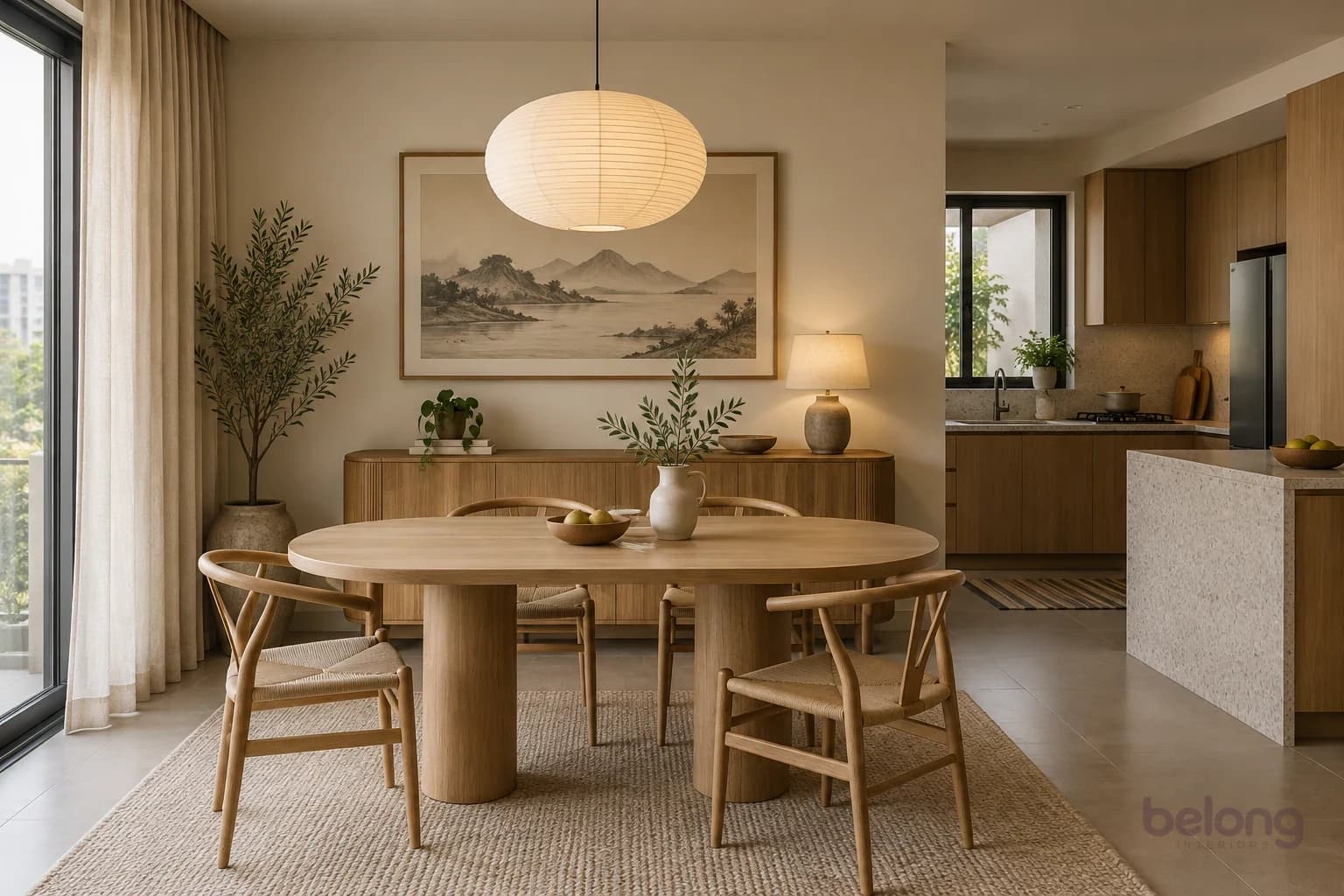
The prettiest curvy rooms are rarely all curves. A crescent sofa looks its best against a straight window, a rectangular rug or a crisp run of cabinets. Straight lines act like a frame, and the curves become the thing you notice. Think of a round mirror over a plain console, or an oval table in a simple rectangular dining room.
A simple way to decide: let the architecture and storage stay mostly straight, and let the things you touch and gather around become soft. Wardrobes, windows, door frames and kitchen runs can stay calm and linear. Sofas, tables, mirrors, lights and handles are where curves feel most natural.
Watch the rhythm, too. Repeat a curve at different sizes, keep one or two strong straight lines, and leave a little breathing room around each soft shape. When every surface bends, the eye has nowhere to rest and the room starts to feel like a film set.
Handles and hardware are an easy middle ground. Round knobs, pill-shaped pulls or a half-moon cut-out on plain cabinet doors bring softness to storage without changing the simple boxes behind them. For the practical side, from sofa footprints to rounded kitchen ends and questions for your joiner, our guide to curves in real Indian flats goes into the detail.
Make the curves your own
Trend pieces can look the same in every home. Curves feel personal when they arrive through materials and objects that already mean something to you, and many of the softest shapes in Indian homes were there long before the trend had a name. Bringing those in keeps the look rooted in your own life rather than in a catalogue.
Think of a cane chair with a rounded back, a bentwood stool, a cluster of terracotta pots on the balcony, a brass urli of water and floating flowers by the door, or the arched niche that holds a lamp in the pooja corner. A round wooden tray, an oval mirror in a carved frame or a stack of brass bowls can carry the curve with a story attached.
Arched niches are a lovely way in, especially when walls are being finished anyway. A shallow arch can hold books, a small lamp or a few family photographs, and it gives a flat wall depth without adding furniture. Where building one is not possible, a painted arch behind a bed or a desk brings much of the same feeling.
Mix old and new freely. A curvy new sofa beside your parents’ straight-backed teak chairs is not a clash. It is a home with a history, and the contrast makes both look better.
Where curves in interiors come from
Soft shapes are not new. Arches and domes are far older than any furniture trend, and every few decades interiors swing back towards curves, with each era giving them a different accent. Here are the broad strokes, with no claim to be a full history.
In the 1920s and 30s, Art Deco loved a polished curve: rounded cabinet ends, fan-shaped chair backs, sunburst mirrors and sleek, streamlined forms. Mid-century modern brought gentler, organic shapes, with moulded seats, kidney-shaped tables and slim tapered legs. The 1970s went low and lounging, with plump sofas, sunken seating and arches in earthy oranges and browns.
In the 1980s, the Memphis-inspired look made curves bold and graphic: half-moons, squiggles and cylinders in bright, clashing colour. Today’s version borrows a little from each but feels calmer, with softer colours, natural materials like wood, linen, cane and lime plaster, and curves chosen for comfort more than drama.
Seen together, the eras share one habit. Each found its own way back to the curve, in its own colours and materials. That is worth remembering when you shop: the curve itself rarely dates, while the colour, fabric and finish usually tell you which decade a piece belongs to.
Curves through the decades
One armchair, five eras. Slide along the line and watch each decade soften the same seat in its own way.
Art Deco1920s–30s
The curve, polished: a tub chair with a fan-pleated back on a gleaming stepped base.
Borrow it today: a fan-shaped headboard or a rounded bar cabinet.
Broad strokes and a little opinion. Every era had many looks; these are its softer moments.
Will the curvy trend last?
Honestly, the loudest version probably will not. Very wavy shelves, novelty shapes and bouclé on everything may start to look of their moment, as every trend eventually does. But soft shapes themselves keep returning, as the decades above show, because people simply like living with them.
The best test is comfort. Choose a curve because it makes sitting, passing, talking or looking better: a sofa people can gather on, a table that is easy to walk around, an arch that frames a view. Those reasons do not go out of style. Think twice when a curve’s only job is to look current.
Another quick check: picture the piece in a plain room with no styling at all. If it still looks comfortable and well made, it will outlive the trend. If it only works in a photograph, let it go.
Spend on the curves that matter and keep the playful ones easy to change. A good oval dining table can stay with you for years; a scalloped cushion cover or a wiggly mirror can move rooms when you fancy something new. If you would like help deciding which curves belong in your home, it is a conversation we love having at Belong.
Questions, answered
What is the curvy interior design trend?
It is a move towards soft outlines at home: curved sofas, rounded coffee tables, arched doorways and niches, pill-shaped mirrors, globe lights and scalloped edges. It is a change of shape rather than a single style, so it works in Japandi, modern Indian, Art Deco and many other looks.
Is the curved furniture trend going to last?
The loudest versions may date, but soft shapes have returned again and again, from Art Deco to mid-century modern and the 1970s. Curves chosen for comfort, like an oval table or a rounded sofa, tend to stay lovely long after the trend moves on.
How can I add curves to my home without renovating?
Start with pieces you can move: a round or oval coffee table, a pill or round mirror, a globe light, a rounded rug or a curved-back cane chair. A painted arch behind a bed or desk gives the feeling of an arch without building one.
How many curved pieces should one room have?
Choose one leading curve, often the sofa, bed or dining table, and echo its shape two or three times in smaller things like a mirror, rug or lamp. Keep a few strong straight lines around them, such as the window, storage and rug edge, so the room feels calm rather than busy.
Is bouclé practical for a family home?
Bouclé is woven from looped yarn, which gives it a soft, nubbly feel that suits rounded chairs and sofas. The loops can snag on claws, buckles and toys, so in a busy home look for a tighter weave, a flecked or deeper colour, or a cover that comes off for washing.
Do curves suit modern Indian interiors?
Very naturally. Arched niches, cane and bentwood furniture, brass urlis and terracotta pots are soft shapes Indian homes have loved for a long time. Pair them with simple, straight storage and warm materials for a look that feels current and rooted.
Every home is different. These notes are a starting point for your own brief, with the details shaped around your space and the people who use it.
Thinking of someone who’d like this?
Send it to the people you’re planning with, or keep it on your reading list.