Trend spotting. What’s shaping homes now, and what will last.
Every season brings a new look to the feed: fluted everything, cocoa walls, checkerboard rugs, a curved sofa in every flat. Some of these ideas will settle in for years, and some will feel very of-the-moment soon. Here are twelve trends shaping homes now, grouped by feeling, with an honest read on where each one belongs in yours.
Trend, fad or classic? How to read what you see
A trend is a shift in how people want to live, showing up in their rooms. A fad is a look that spreads fast and fades just as fast. A classic is something that keeps coming back because it simply works: good daylight, a comfortable chair, wood that ages well.
The trick is to look underneath the look. Curved sofas are a shape. Wanting softer, kinder rooms after long, busy days is the feeling underneath. Feelings tend to last longer than shapes. When a trend answers a real need in your home, it is far more likely to stay useful.
Here is a quick test: would you still choose it if nobody ever saw your home? If the answer is yes, it is probably yours. If the honest answer is “only for the photo”, enjoy it somewhere small and easy to change.
And keep it fun. Think of the trends below as a menu, not a rulebook. Pick what makes you smile and leave the rest. You do not need any of them to have a lovely home.
Swipe your trend taste
Twelve trends, one card at a time. Keep the ones you love, skip the rest, and see what your mix says about you.
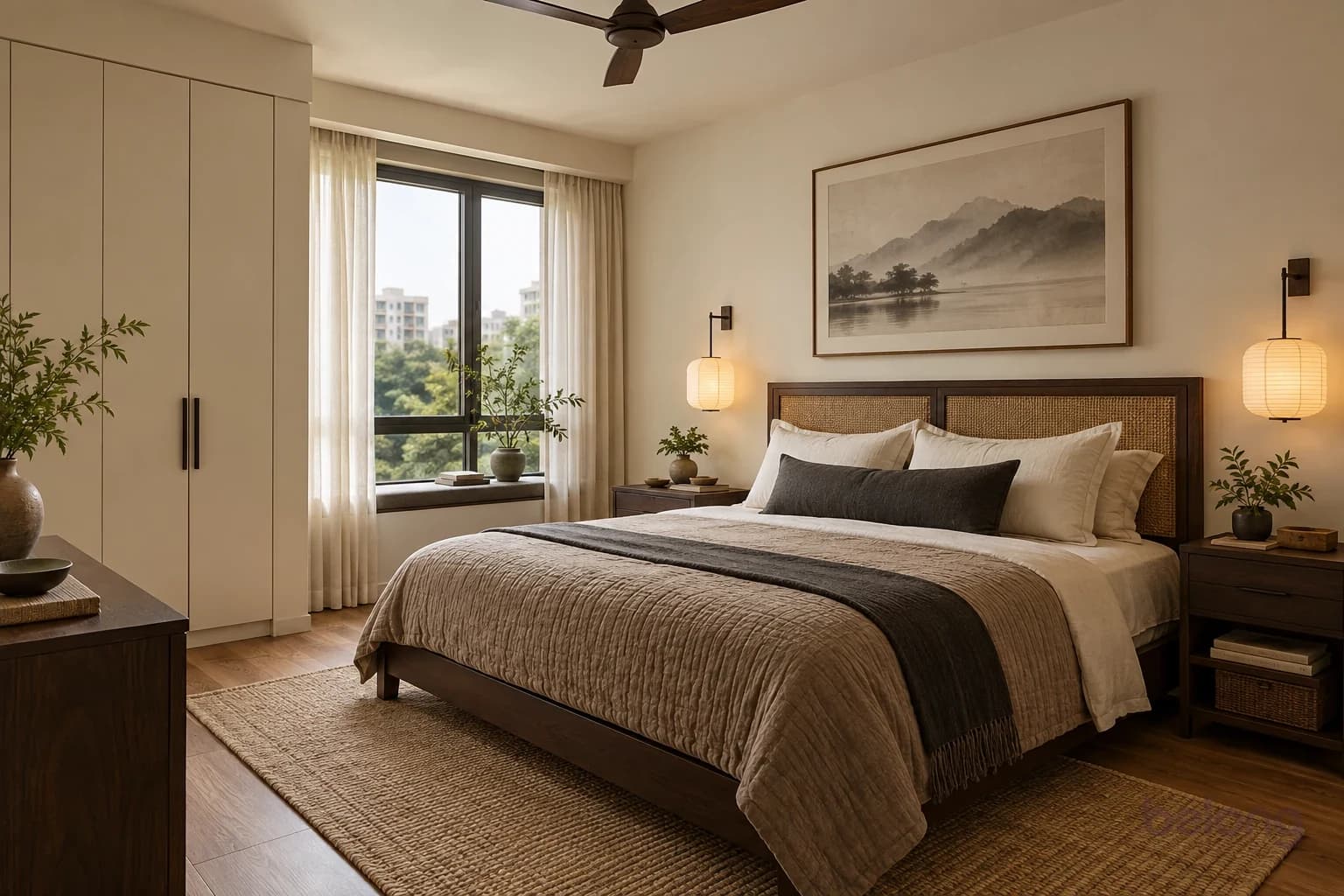
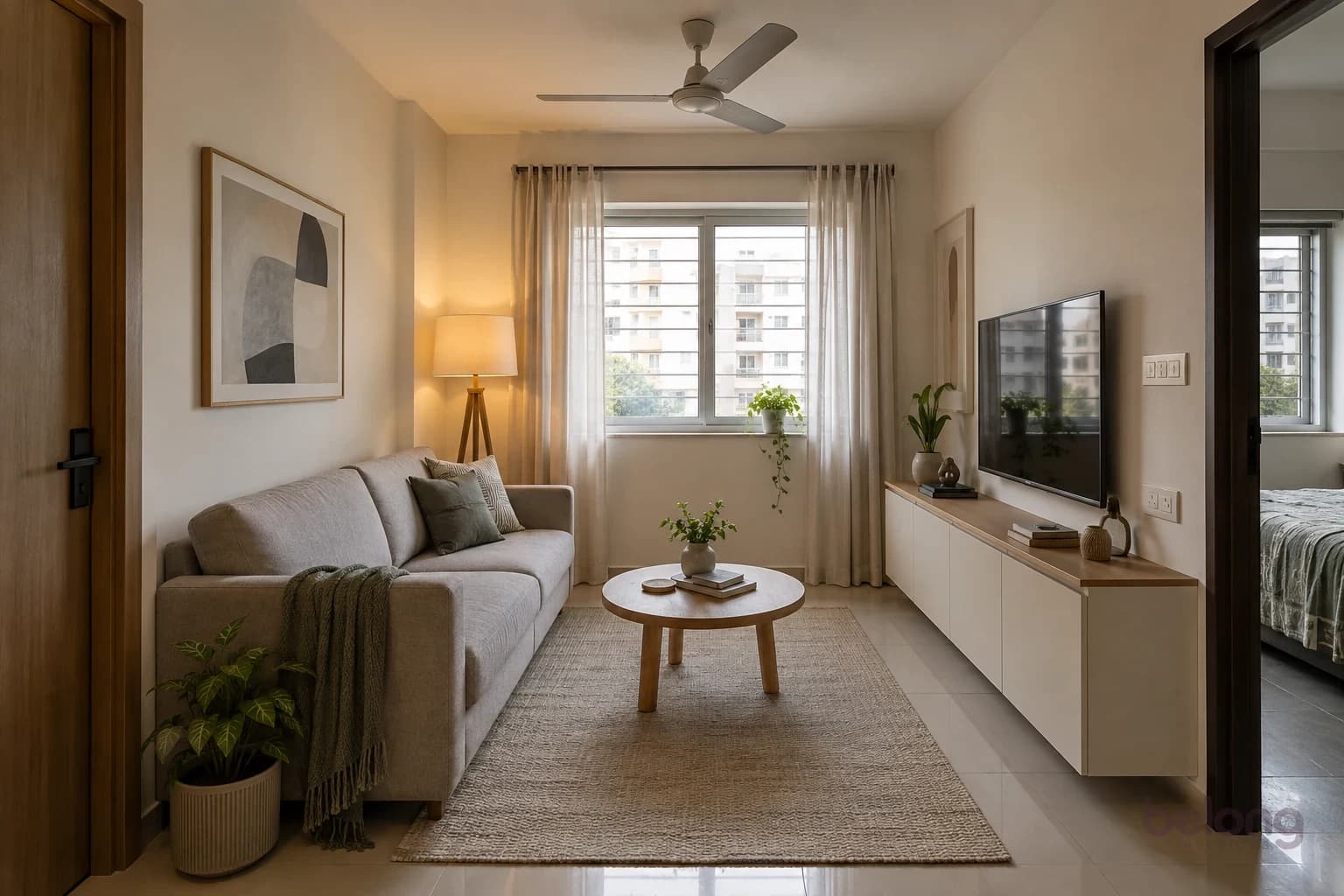
Calm
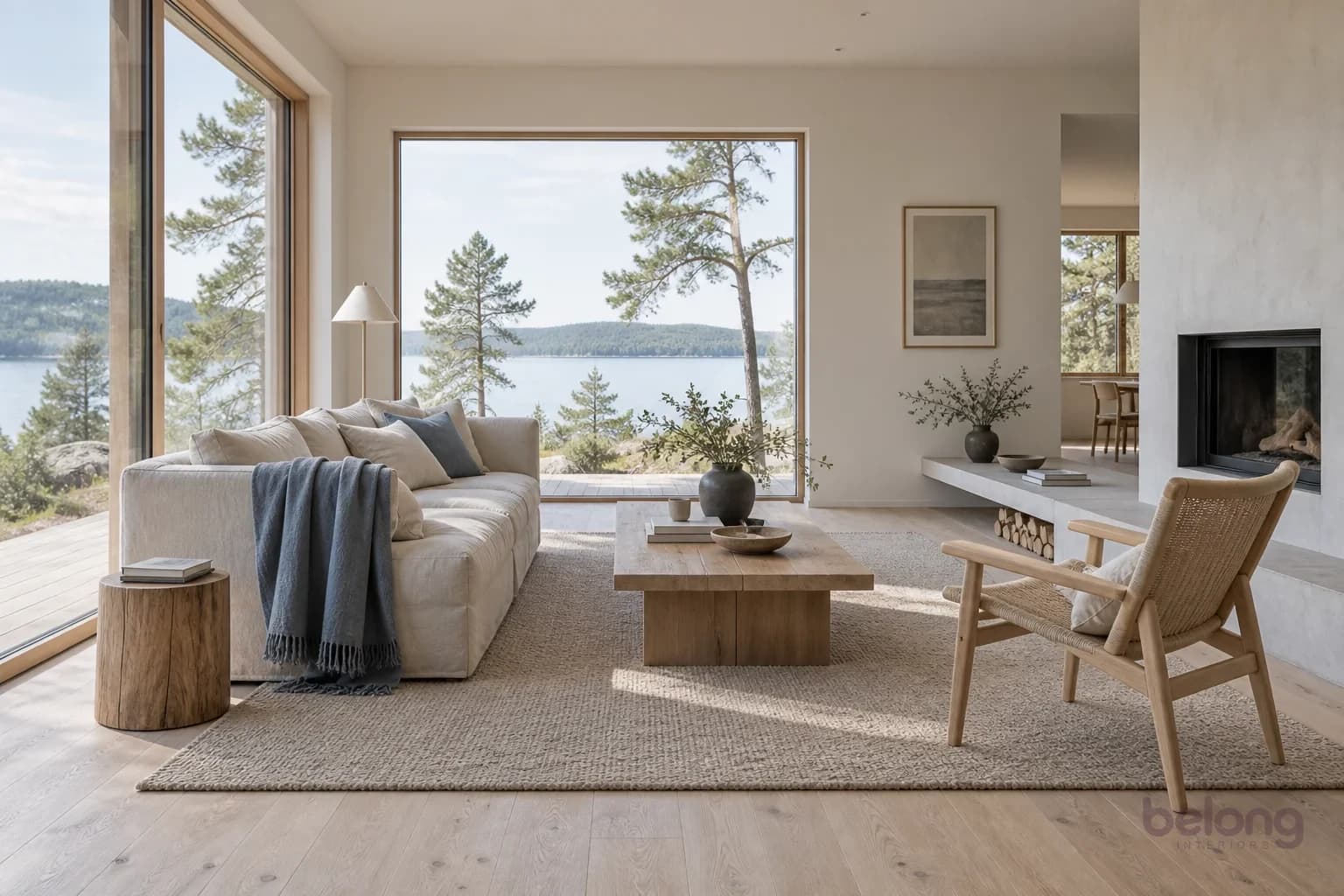
Warm minimalism
Clear surfaces and closed storage, in oat, sand and soft wood.
1 of 12
Trends you love will pin themselves here.
Photos are design studies, there to show each idea rather than a finished project.
Calm rooms: warm minimalism, Japandi and biophilic living
Warm minimalism keeps the clear surfaces and closed storage of minimalism but swaps cold white for oat, sand and soft wood. It feels restful rather than bare. In a busy Indian home it usually starts with storage: a proper place for school bags, chappals and the mixer grinder, so the room can breathe.
Japandi calm borrows the low furniture and quiet palette of Japanese rooms and the comfort of Scandinavian ones. Think a low sofa, a slatted wooden unit, linen, paper lamps and a few good pieces rather than many. Pale and dark woods can sit together, as long as there are only two or three. It suits flats well because it relies on proportion and restraint, not square footage.
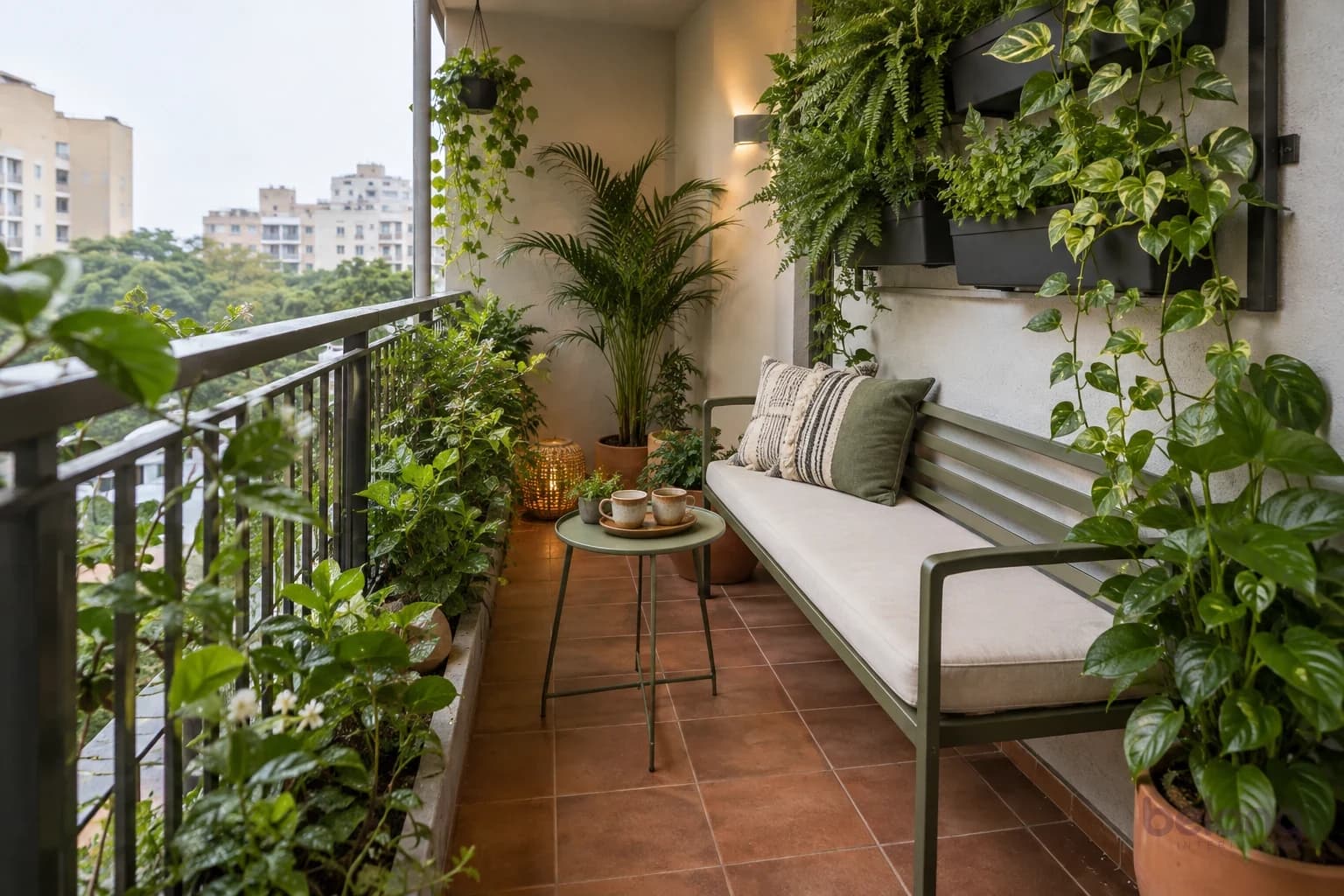
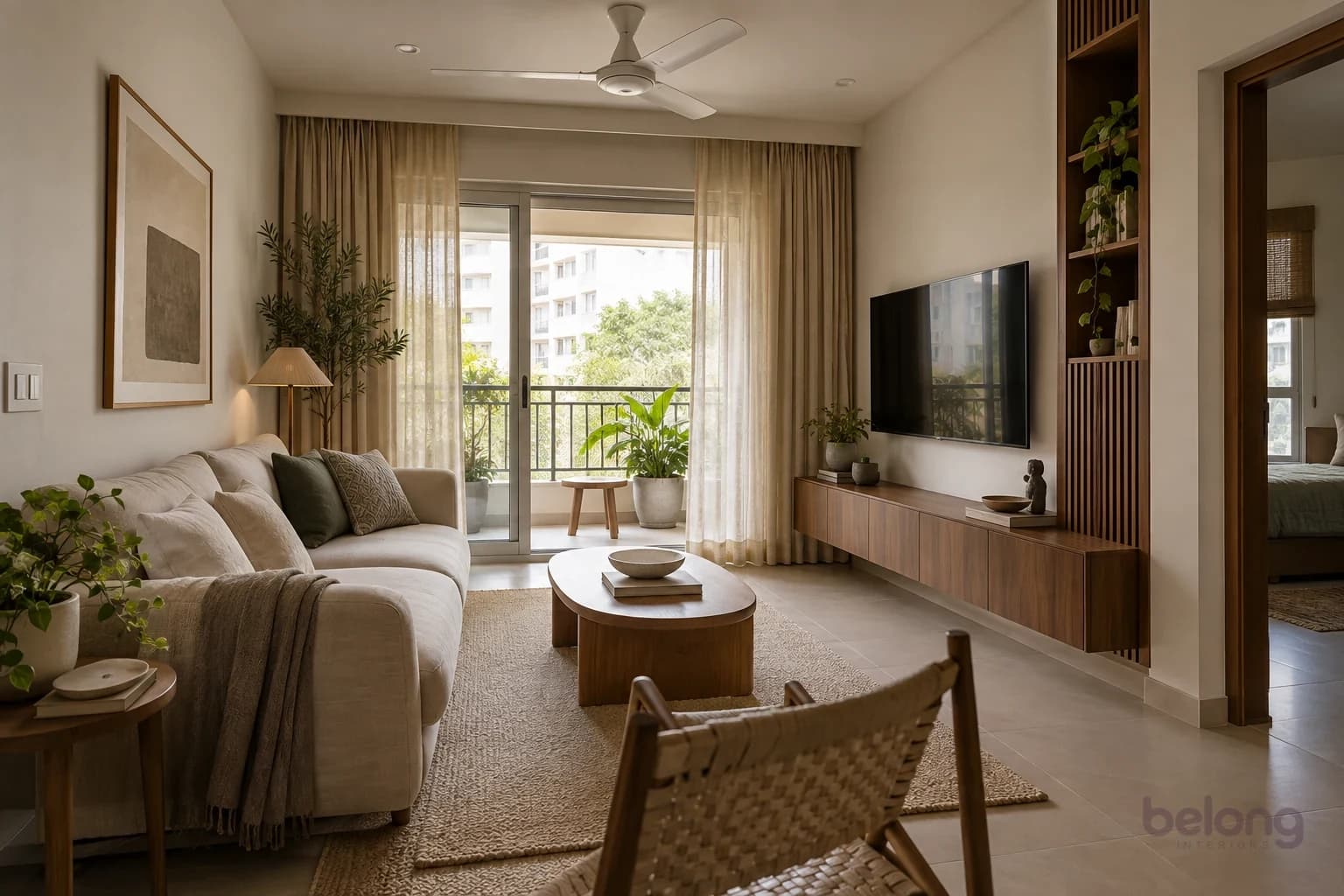
Biophilic living is the grand name for bringing nature in: plants, daylight, natural materials and a view of something green. A balcony with a few pots and a seat, sheers that let the light through, a wooden table you enjoy touching. Of all the trends here, it is the one closest to how people have always wanted to live.
If calm appeals, begin by subtracting rather than shopping. Clear one surface, close one open shelf, swap a busy print for plain linen. Then add one natural thing you love to look at, like a plant, a wooden bowl or a paper lamp. Calm is mostly about what you leave out.
Feelings tend to last longer than shapes.
Soft shapes: why curves are everywhere
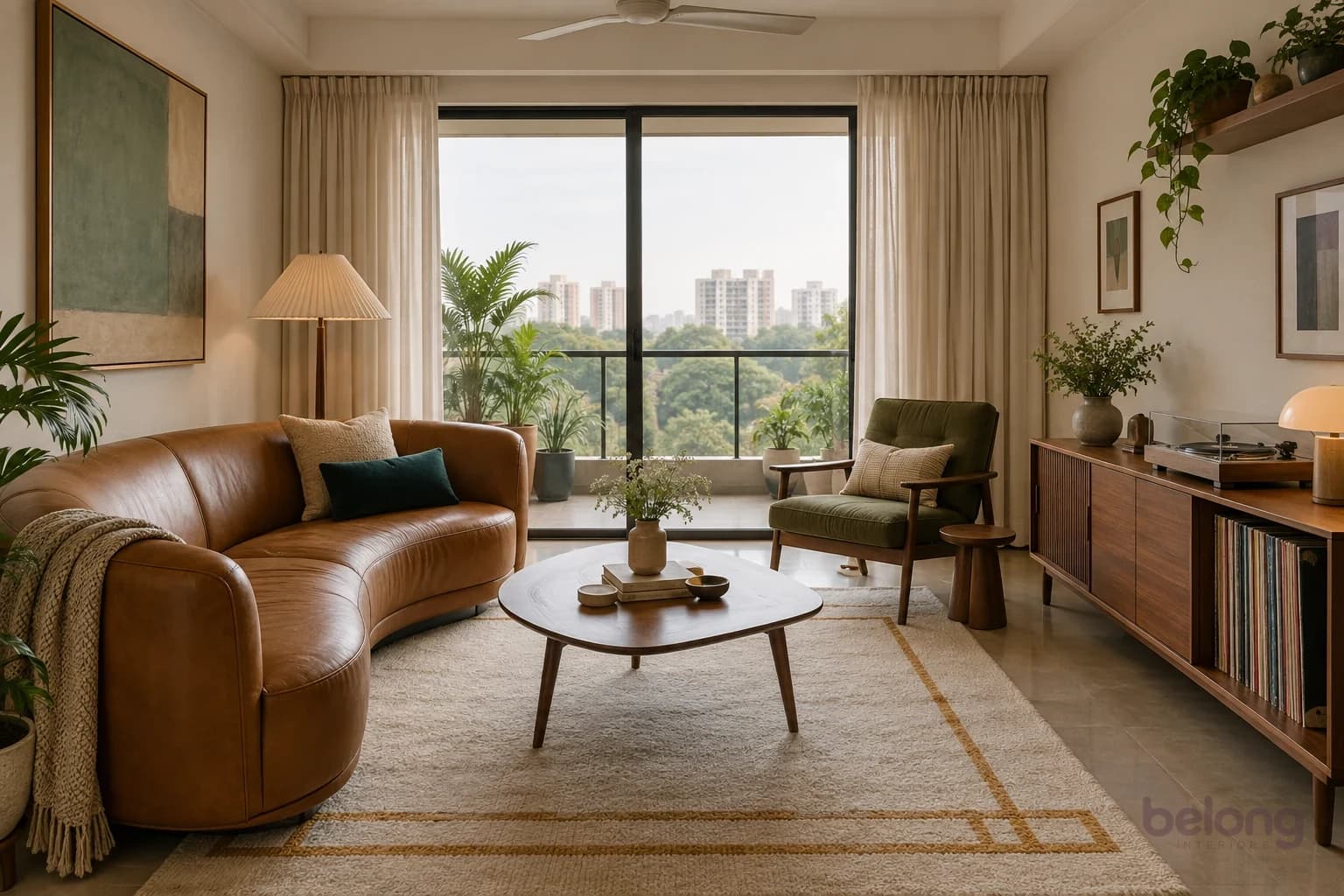
Rounded sofas, arched mirrors, scalloped edges and pill-shaped tables have softened rooms everywhere. A curve slows the eye down. It makes a corner feel friendlier and a small room feel less boxy.
Curves also happen to be practical in a flat. A round table squeezes in one more chair when relatives visit and has no sharp corners at toddler height. A rounded end on a kitchen counter or a wardrobe is kinder to hips in a narrow passage.
Not every curve ages the same way. Simple arcs, like a round table, an arched doorway or a soft-cornered sofa, have been around for a very long time. Very wobbly mirrors and blob-shaped furniture belong more to this moment, so keep them to pieces you could happily move on.
The easiest way in is one shape you love: a round coffee table, an arched mirror, a headboard with a soft top. If you want to go further, curves have a whole story of their own.
Colour comes home: cocoa, drenching, jewel tones and joyful pattern
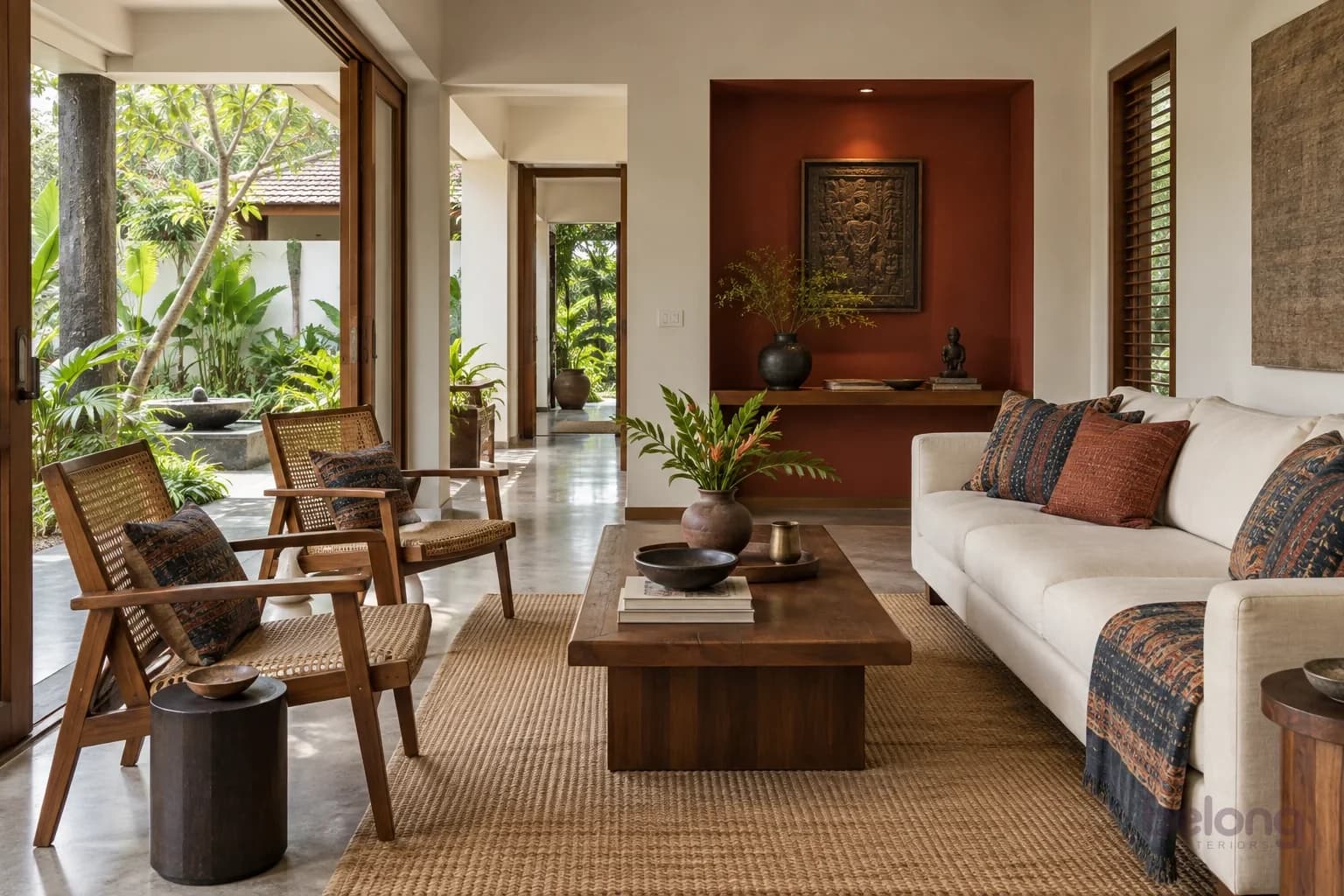
After years of grey and white, warm colour is back. Cocoa, cinnamon, clay and terracotta feel earthy and grounded, and they glow in warm evening light. They are also more forgiving of dust and daily wear than pure white walls. If you are nervous, start with one wall behind the bed or the sofa.
Colour drenching takes one colour across the walls, the trim, the doors and sometimes the ceiling, so the whole room feels wrapped. It sounds bold, but in a single soft shade it can feel surprisingly calm. A small study, a powder room or a reading nook is a good place to try it.
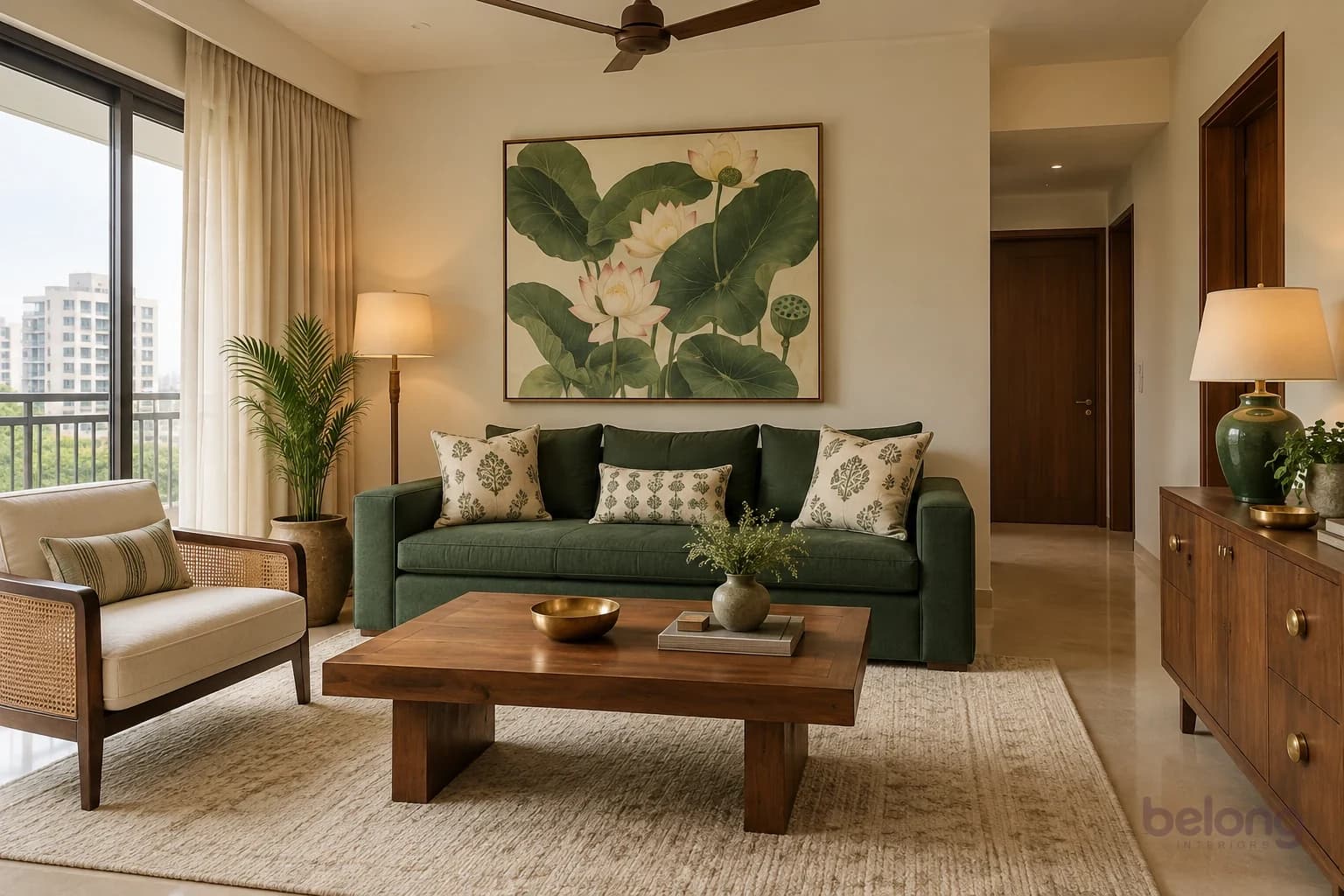
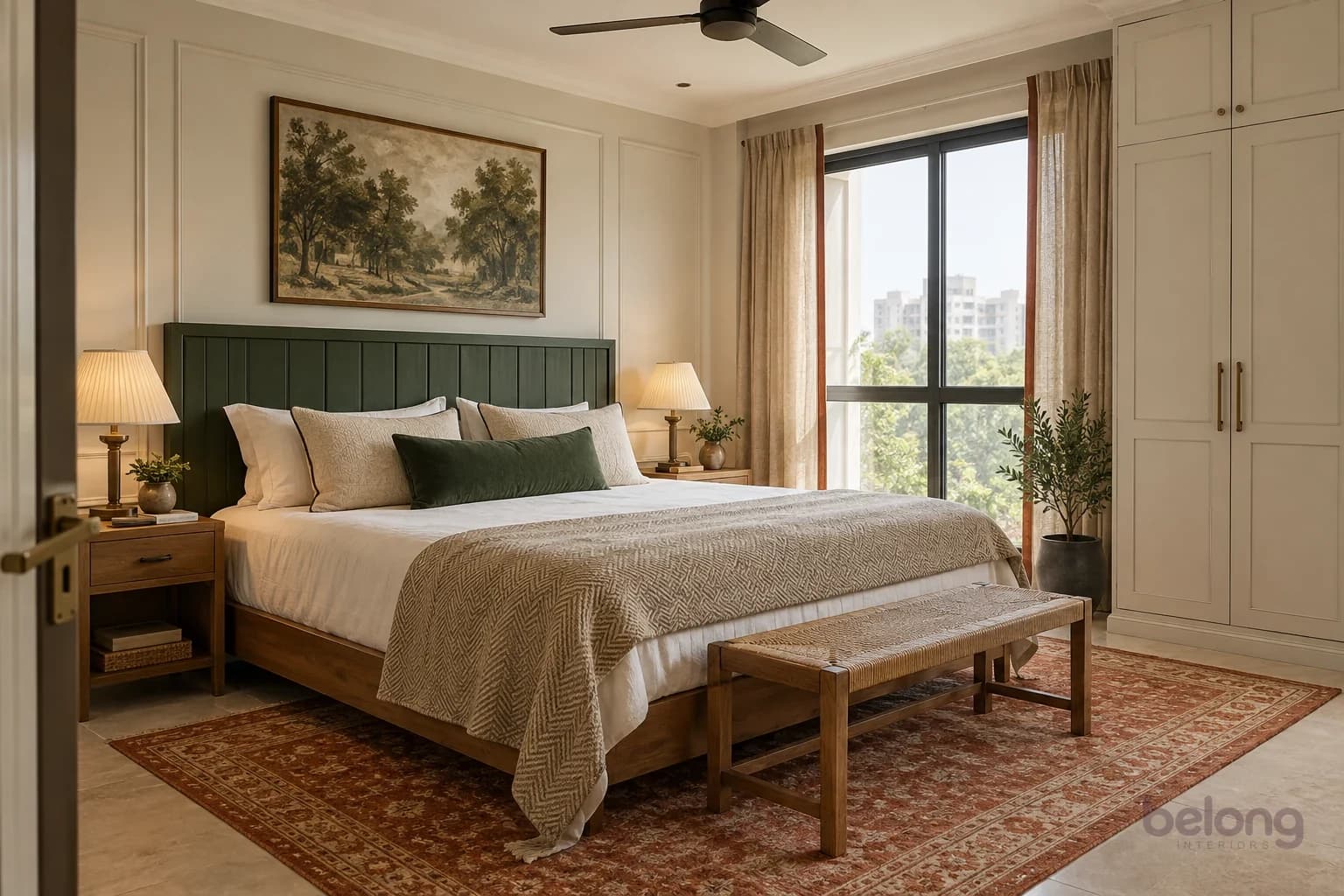
Jewel tones go deeper: emerald, petrol blue, plum and ruby, often in velvet. A velvet headboard or a single emerald armchair feels rich without filling the room. Velvet can feel warm in the hottest months, so plenty of people start with cushions before they commit to a sofa.
Joyful colour and pattern, sometimes called dopamine décor, is the cheerful end of it: checkerboard rugs, gingham, scalloped edges, cherry red beside blush pink. It is playful and very personal. Kids’ rooms and bedding are natural homes for it, because they change as life changes.
Texture and craft: fluted, terrazzo and the handmade
Fluted and reeded surfaces, those rows of soft vertical ridges, have moved from old columns to kitchen islands, TV units, glass doors and lamps. They add shadow and rhythm to a plain surface. Fluted glass also blurs clutter while letting light through, which is handy on a crockery unit. On a lamp or a side table, it is an easy, low-risk way to try the look.
Terrazzo is old, but its confetti look is having a moment. You see it on counters, side tables, trays and tiles, in soft speckles or big playful chips. Because it usually goes into floors and worktops, a quiet speckle is the safer choice if you want it for years. Ask for a sample and look at it in your own light, morning and evening.
The handcraft revival is the one many Indian homes never really left: cane, rattan, block-printed cotton, terracotta, brass and handloom. What is new is how it is used, like a cane panel on a wardrobe or a block-print quilt on a plain bed, mixed with clean modern lines.
Texture is kind to real life, too. A ribbed front or a speckled top hides fingerprints and small marks better than a flat, glossy one. That practical side may be part of why these ideas have travelled so far.
The way we live now: multi-use rooms and flexible storage
Some of the biggest changes are not about looks at all. Many homes now ask one room to do three jobs: a guest room that is also a study, a dining table that is also a desk, a bedroom with a quiet corner for calls. Rooms that bend are more useful than rooms that match.
That shows up as foldaway desks, wall-mounted tables, sofa beds for visiting relatives and storage that can change as children grow. Closed storage with adjustable shelves outlasts any single look, because it can hold school projects this year and festival boxes the next.
Ceilings are getting attention too. A painted or softly lit ceiling, sometimes called the fifth wall, can mark out a dining corner in an open room without adding a single piece of furniture. A soft colour or a simple wooden batten detail usually ages better than a busy pattern. Plan it around the ceiling fan and the lights, so they sit comfortably together.
Flexible storage is the quiet hero of this camp. Deep drawers in the kitchen, a wardrobe with movable shelves and hanging rods, a bed with room underneath for spare bedding and mattresses. None of it photographs like a trend, yet it is what makes a small flat feel bigger, year after year.
Fad or forever? The trend map
Left to right: how easy a trend is to try. Bottom to top: how long we think it will last. Tap a trend for our read and where to try it first.
Safe bets: easy to try, likely to last
Worth planning: a bigger step, likely to last
Just for fun: easy to try, may pass
Think twice: a bigger step, may pass
- Calm
- Soft shapes
- Colour
- Texture & craft
- How we live
Fluted and reeded surfaces
Our read. Fluting is an old classical detail, but fluted everything is very of the moment. One fluted feature will age far better than ten.
Try it first. A fluted lamp or side table, or fluted glass on one crockery unit.
This map is Belong’s opinion, not a forecast. Nobody can promise what will last, so if you love something, that counts for more than any map, this one included.
Our honest read: which trends will last
This part is opinion, not a forecast. Nobody can promise what homes will look like in ten years, including us. But after thinking about homes all day, here is where we would place our bets.
The ideas most likely to stay are the ones tied to how people live. Daylight, plants and natural materials. Calm, well-organised rooms. Spaces that do more than one job. Craft that has been around for generations is unlikely to go anywhere now.
Curves and warm, earthy colour feel like longer swings than quick fads. They may soften or change shade, but the move away from cold, hard rooms seems real. Japandi as a label may fade, while its habits of fewer, better things and low, comfortable furniture stay.
The looks most likely to date are the most specific ones: fluting on every surface, big confetti terrazzo floors, a whole home in one bold drench, checks on everything. None of them is wrong. They are simply happiest in places that are easy to change. And if you truly love one of them, that is reason enough to have it.
How to use a trend without dating your home
Think of your home in layers that change at different speeds. Cushions, paint, lamps and bedding are easy to change. Rugs, chairs and curtains tend to stay a few years. Kitchens, wardrobes, floors and bathrooms are meant to stay for a long time, and they are the hardest to redo.
Put the bold idea where it is easy to change. Let the long-lasting layer stay timeless: simple shutters, good hardware, quiet floors and a calm worktop. A plain kitchen will happily wear a new wall colour, new pendant lights or a cheerful runner every few years. Lamps and bedding are where trends can come and go freely.
If you love a trend for something permanent, choose its gentlest version. A soft speckle rather than big terrazzo chips. One fluted panel on an island rather than every shutter. Cane inserts that can be replaced. Then live with a sample for a while before you commit.
One last check before anything permanent: picture the idea five years from now, with new curtains and a different sofa. If it still feels right, go ahead. If it only works with today’s exact styling, keep it on the easy-to-change layer.
Where should a trend live?
A home changes at three speeds. Pick a trend and the shelves light up as far down as we’d let it go.
Easy to changeGo for it
Cushions, paint, lamps
Velvet cushions, a jewel-toned throw, a coloured glass lamp.
Every few yearsGo for it
Rugs, chairs, curtains
A velvet headboard or armchair in emerald or petrol blue.
Long-lastingKeep it classic
Kitchen, wardrobes, floors
Calm shutters and floors; a painted wall can carry the colour instead.
Jewel tones and velvet: go for it on easy to change and every few years pieces; keep long-lasting pieces classic.
Trend spotting without trend panic
You do not need to keep up. A home that follows every trend ends up looking like a catalogue from one particular year. A home that picks a few ideas it genuinely loves, and mixes them with family pieces and good basics, ends up looking like the people who live there.
When a new trend catches your eye, ask three small questions. What exactly do I love about it? Where in my home is it easy to try? Would I still choose it if no one ever saw it? The answers will tell you whether it is a passing crush or a keeper.
So start with how you live, then let trends add the fun. Save the images that make you smile, notice what repeats and ask what need sits underneath. If you would like help turning a moodboard into a home that still feels right years from now, that is a conversation Belong always enjoys.
Questions, answered
What are the latest interior design trends?
Homes are moving towards warm minimalism, Japandi calm, plants and daylight, soft curves, earthy colours like cocoa and terracotta, colour drenching, jewel tones and joyful pattern. Fluted surfaces, terrazzo and a revival of handcraft such as cane and block print are popular too, alongside multi-use rooms and flexible storage.
Which interior design trends will last?
In our view, the ideas tied to how people live are the most likely to last: daylight and plants, natural materials, calm and well-organised rooms, flexible spaces and craft. Very specific looks, such as fluting on every surface or a whole home in one bold colour, tend to date sooner. This is opinion, not a forecast.
How can I follow a trend without my home looking dated?
Put bold ideas into things that are easy to change, like cushions, paint, lamps and bedding, and keep long-lasting pieces like kitchens, wardrobes and floors simple. If you want a trend in something permanent, choose its gentlest version and live with a sample before you commit.
What is the difference between a trend, a fad and a classic?
A trend reflects a real shift in how people want to live, so it tends to stay for a while. A fad spreads quickly and fades quickly. A classic keeps returning because it works, like good daylight, comfortable seating and materials that age well.
What is colour drenching?
Colour drenching means painting the walls, trim, doors and sometimes the ceiling in one colour or very close shades, so the room feels wrapped in it. It is easy to try in a small room such as a study or powder room, and paint is simple to change if you tire of it.
Do Japandi and warm minimalism suit Indian homes?
Yes, as long as there is good storage. Both rely on clear surfaces, so they work best when everyday things like school bags, shoes, dabbas and appliances have a closed place to live. Warm woods, linen and cane keep them from feeling cold.
Every home is different. These notes are a starting point for your own brief, with the details shaped around your space and the people who use it.
Thinking of someone who’d like this?
Send it to the people you’re planning with, or keep it on your reading list.