Follow one ordinary meal
Think through preparing a meal you cook often. Where do ingredients come from? Where are they washed, chopped and cooked? Where does the used cookware go? This simple exercise reveals awkward journeys that a photograph of a kitchen will not show.
Consider how many people use the kitchen together. Someone making tea while another person cooks can change where you want clear space. Share those routines with your designer before agreeing the positions of major elements.
Take an inventory before adding storage
Write down the appliances and utensils you use regularly, including the items that need to stay on the counter. Check the actual sizes of larger cookware and appliances. A drawer is only useful if its contents fit and can be reached comfortably.
Group storage around use: preparation tools near the preparation area, everyday plates where they are easy to return, and less-used pieces somewhere they do not interrupt the daily routine. The most elaborate organiser is not always the best solution.
Discuss the practical constraints early
Existing plumbing, ventilation, power and appliance requirements can affect a layout. Have these reviewed by the appropriate professionals before committing to cabinetry. A considered plan accounts for the site rather than assuming a reference kitchen can be copied exactly.
Ask to see how doors, drawers and appliances open together. Handles and corners can create conflicts that are easy to miss in a front-on drawing. Reviewing them early gives the design room to adapt.
Then bring in the material palette
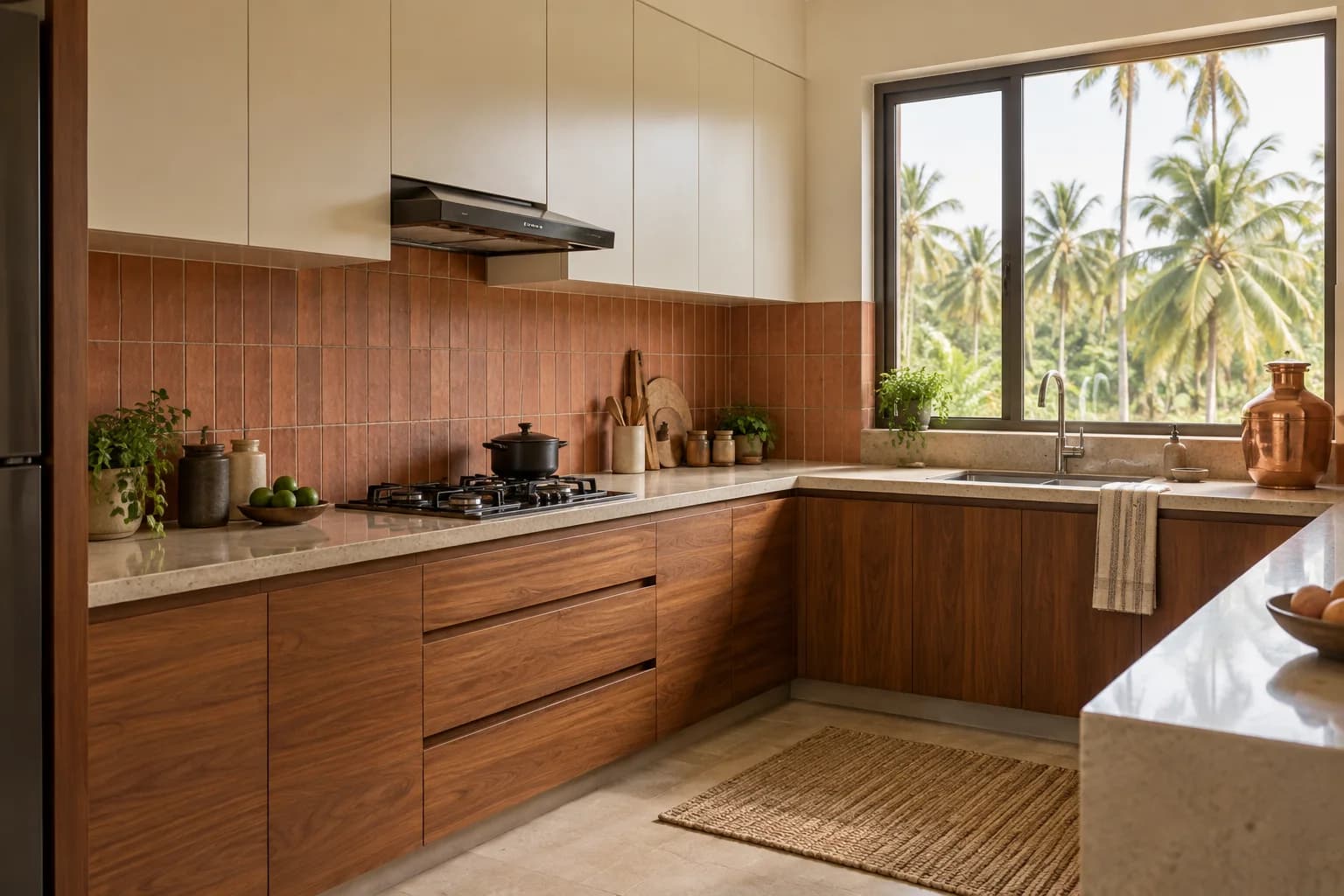
Once the arrangement works, compare finishes as a group: cabinet fronts, worktop, backsplash, floor and hardware. Look at samples in the light your kitchen receives. Ask about the care each surface needs and what everyday wear may look like.
Make a written record of the agreed materials and specifications. It gives everyone a clear reference as the kitchen takes shape, and helps keep the final decisions connected to the original priorities.
Every home is different. These notes are a starting point for your own brief, with the details shaped around your space and the people who use it.
Talk through your ideas