Make a small living room feel generous.
A smaller living room does not always need smaller furniture. It needs a clear plan for movement, seating and storage. The aim is to make the space feel comfortable for the way you actually use it, with less effort in the everyday.
Start with the route through the room
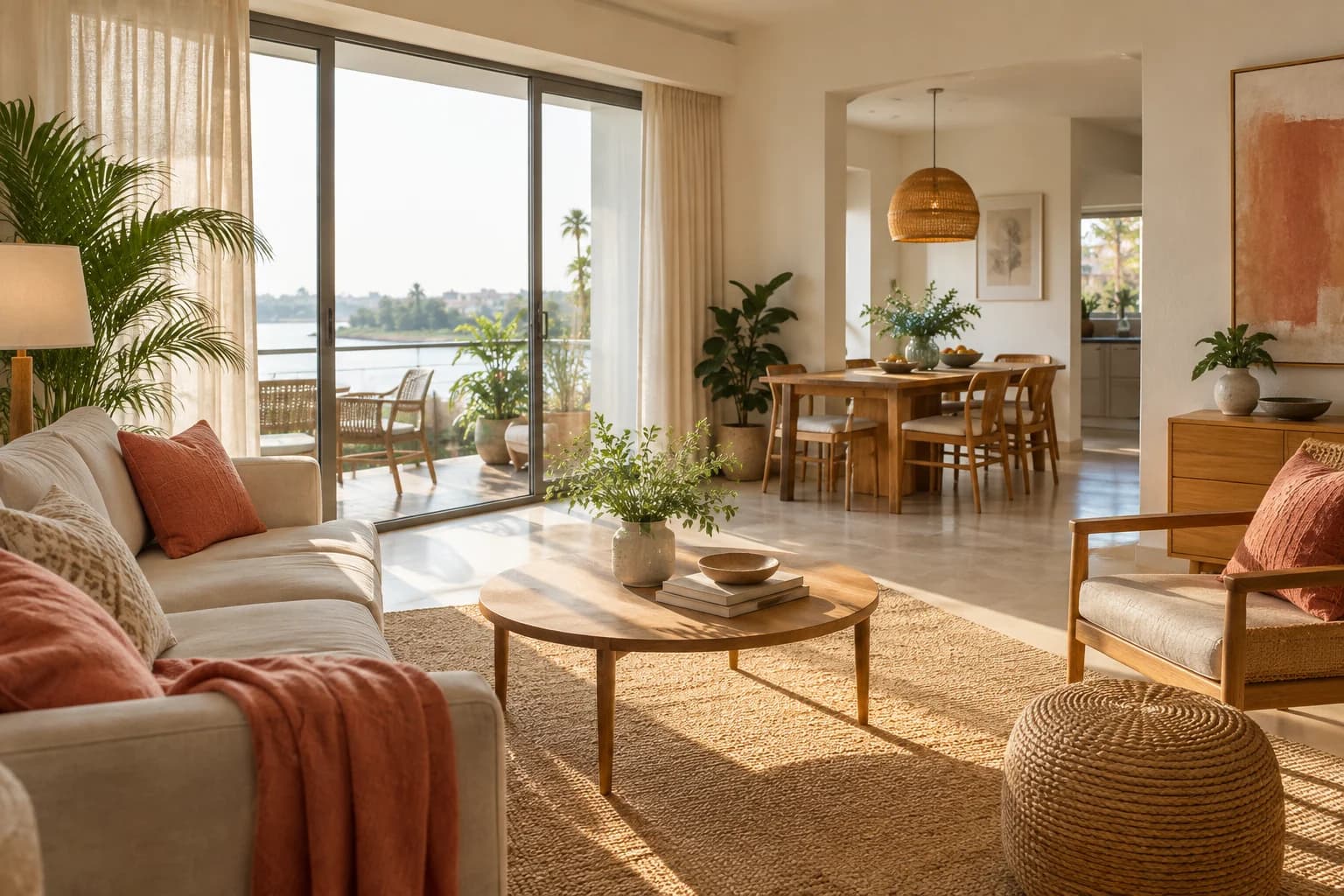
Before choosing a sofa, draw the route from the entrance to the next room, balcony or dining area. Notice where people pause and where doors need space. A clear route can make a room feel calmer even when its furniture stays the same.
Use the actual dimensions of pieces you are considering. Marking their outlines on the floor with removable tape can help you understand the arrangement. Check the space with doors open and with someone sitting in the chair.
Choose a few pieces that work hard
A comfortable sofa and one well-placed chair may serve you better than several small seats scattered around the edges. Think about the number of people who use the room most days, then make a plan for occasional guests.
A side table that moves, a bench with storage or a wall shelf can add flexibility. Avoid making every item perform three jobs if that makes it awkward to use. Everyday ease matters more than a clever product description.
A clear route can make a room feel calmer even when its furniture stays the same.
Give storage a clear purpose
List what tends to land in the living room: chargers, toys, books, remote controls or work bags. Plan an accessible home for those things near where they are used. Storage helps most when it suits the objects, not just the available wall.
A mix of open and closed storage can feel balanced. Keep the things you enjoy seeing on display and give the visual clutter somewhere simple to disappear. Empty space on a shelf is part of the arrangement too.
Reduce competing visual lines
A consistent curtain treatment, a considered rug and a small family of finishes can help different parts of the room feel connected. This does not require an all-white palette. Warm colour can still feel spacious when the overall composition is clear.
Finish by looking at the room from its entrance. If several objects compete for attention, remove or move one before buying another. A generous room is often one in which each piece has a little breathing space.
Every home is different. These notes are a starting point for your own brief, with the details shaped around your space and the people who use it.
Thinking of someone who’d like this?
Send it to the people you’re planning with, or keep it on your reading list.