Clutter-free, not cold. Minimalism for real homes.
Minimalism has a reputation for bare white rooms and owning almost nothing. Real homes hold steel dabbas, school bags, festival boxes and a spare mattress for when relatives come to stay. A clutter-free home is not about having less. It is calm surfaces, warm materials and an easy home for everything you keep.
What minimalism really means in a real home
Minimalist interior design is often pictured as a white room with one chair in it. That room photographs beautifully, but few families could live in it for a week. A home that is used every day holds a lot of things, and it should.
A more useful definition is this. A clutter-free home is one where every everyday thing has a place to go, and the surfaces you look at most are left to breathe. The dining table, the kitchen counter, the top of the shoe cabinet and the floor around the sofa are where calm is won or lost.
So the first question is not how much to throw away. It is where each thing lives, and how easy it is to put back. Calm does not come from owning less, but from giving everything you own an easy home. When putting something away takes a few seconds, tidying stops being a weekend project and starts happening on the way past.
Seen like this, minimalism is less a style than a way of editing. It works just as well in Japandi, modern Indian or contemporary rooms, because it is about how much the eye has to take in, not about one particular colour.
From clutter to calm
Nothing in this room has to go. Each thing just needs a home. Slide to put them away, one by one.
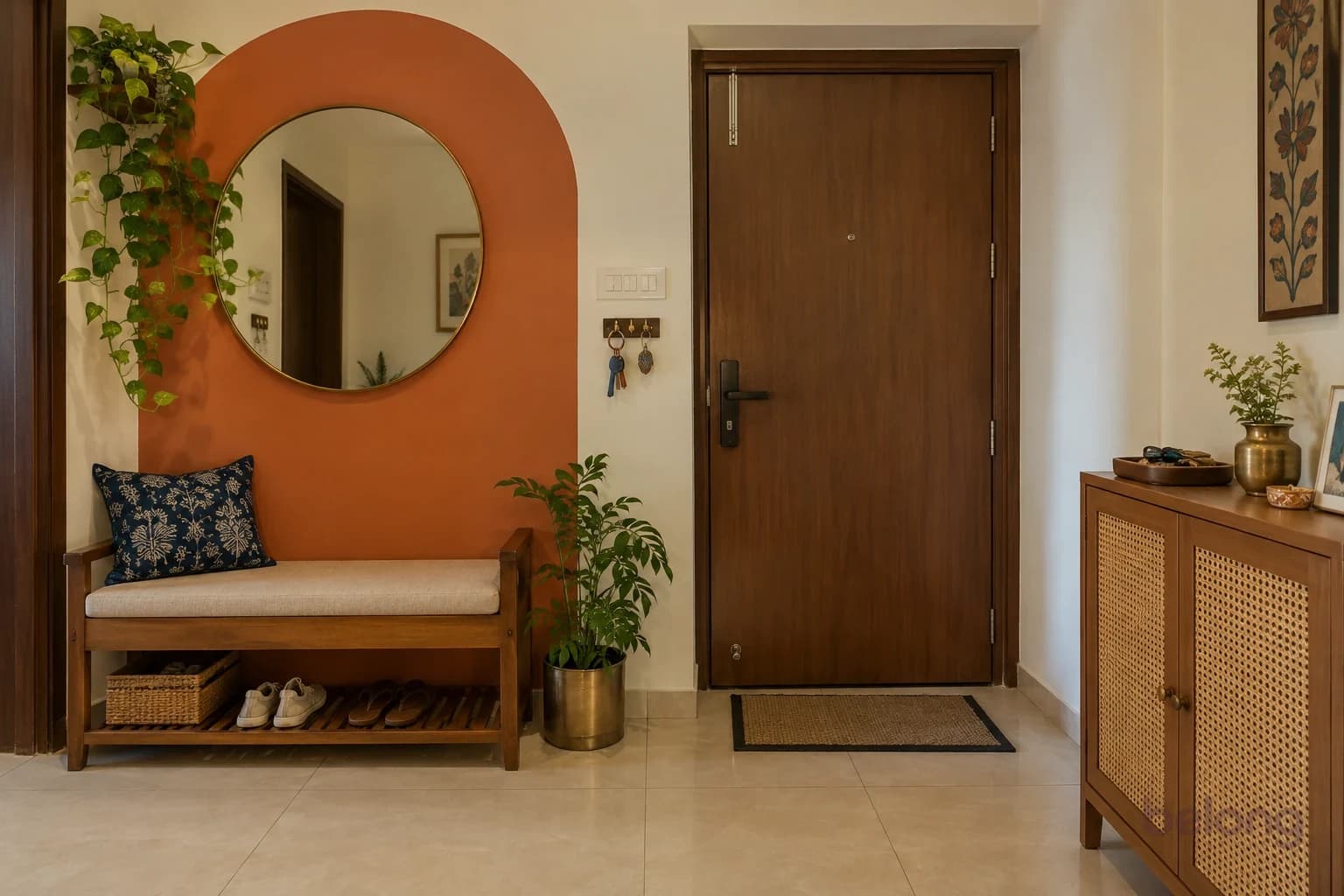
Start at the door with a landing strip
Most clutter walks in through the front door. Chappals, school bags, office bags, keys, helmets, umbrellas and the day’s post all arrive at once, and whatever has no home by the door ends up on the sofa or the dining table.
A landing strip is a small zone just inside the entrance where all of that can land. A closed shoe cabinet with some ventilation, a ledge or seat for taking shoes off, two or three hooks and a bowl for keys. In the monsoon, add a stand with a drip tray, so wet umbrellas stay by the door instead of travelling through the home.
Keep the top of the shoe cabinet nearly clear. One bowl for keys and perhaps a small plant is plenty. If that surface fills up, it becomes the place where everything waits to be dealt with, and the calm you planned at the door quietly disappears.
If the entrance is only a strip of wall, go up rather than out: a shoe cabinet that is shallow but tall, hooks at two heights so children can reach their own, and a narrow mirror for the last look before you leave. Even a small landing strip changes where things end up.
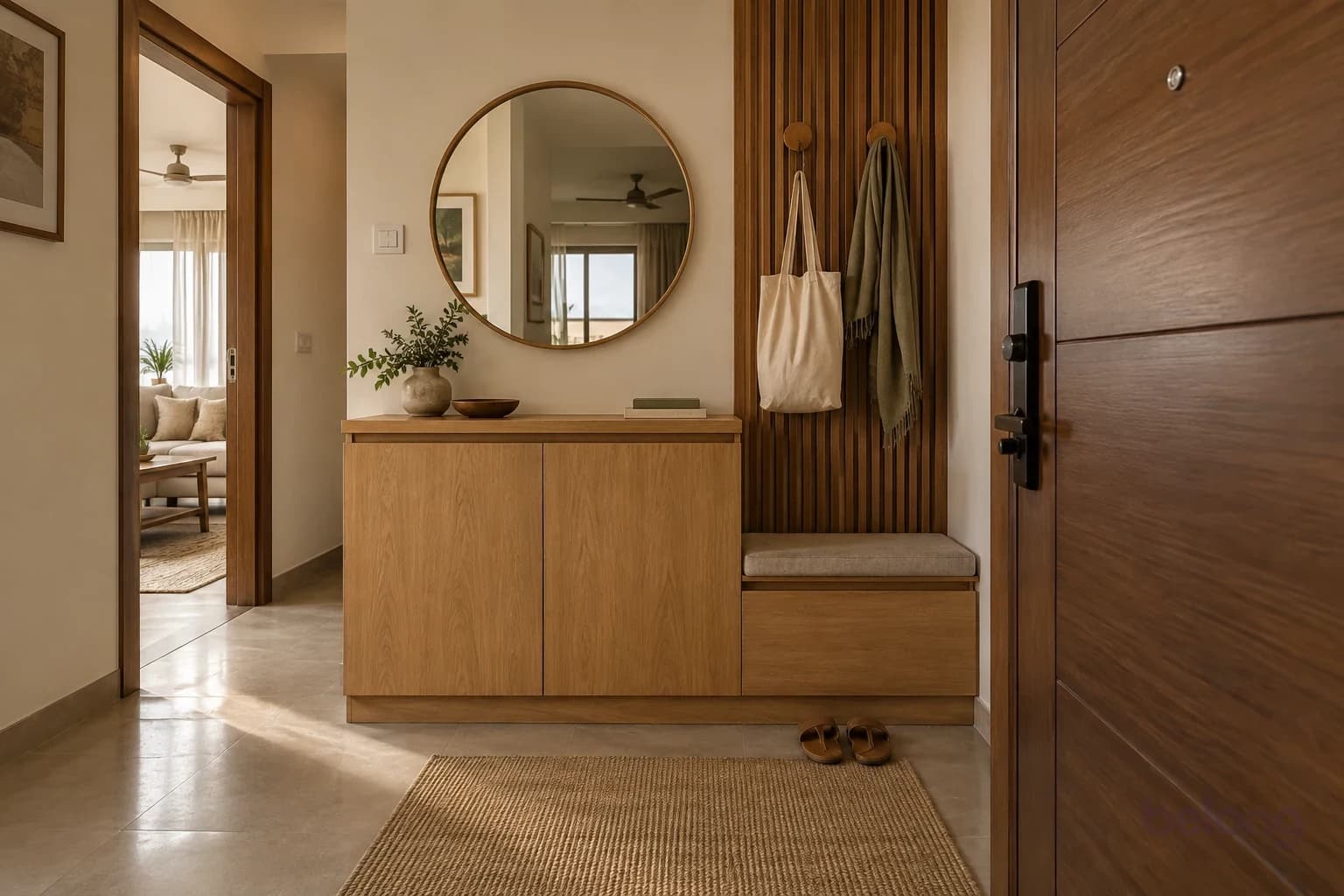
Calm does not come from owning less, but from giving everything you own an easy home.
Closed storage does the heavy lifting
In a clutter-free home, most things live behind doors. Closed storage lets the many small objects of family life disappear behind one quiet surface: a wall of wardrobe shutters, a long low cabinet, a loft with plain fronts. The room reads as a few calm planes instead of a crowd of little things.
Open shelves are for the loved few. A brass lamp from your grandmother, the books you are reading now, a bowl you brought back from a trip. Keep open storage small and leave space around each piece, so it looks chosen rather than crowded.
A useful test is to stand in the doorway and notice how many separate things you can see. If it is more than you can take in at a glance, look for what could move behind a door, rather than out of the house.
The best storage sits at the point of use. Chargers live by the bed, the iron lives where you iron, and school things live near where homework happens. If a thing’s home is far from where it gets used, it will not be put back, however lovely the cupboard is.
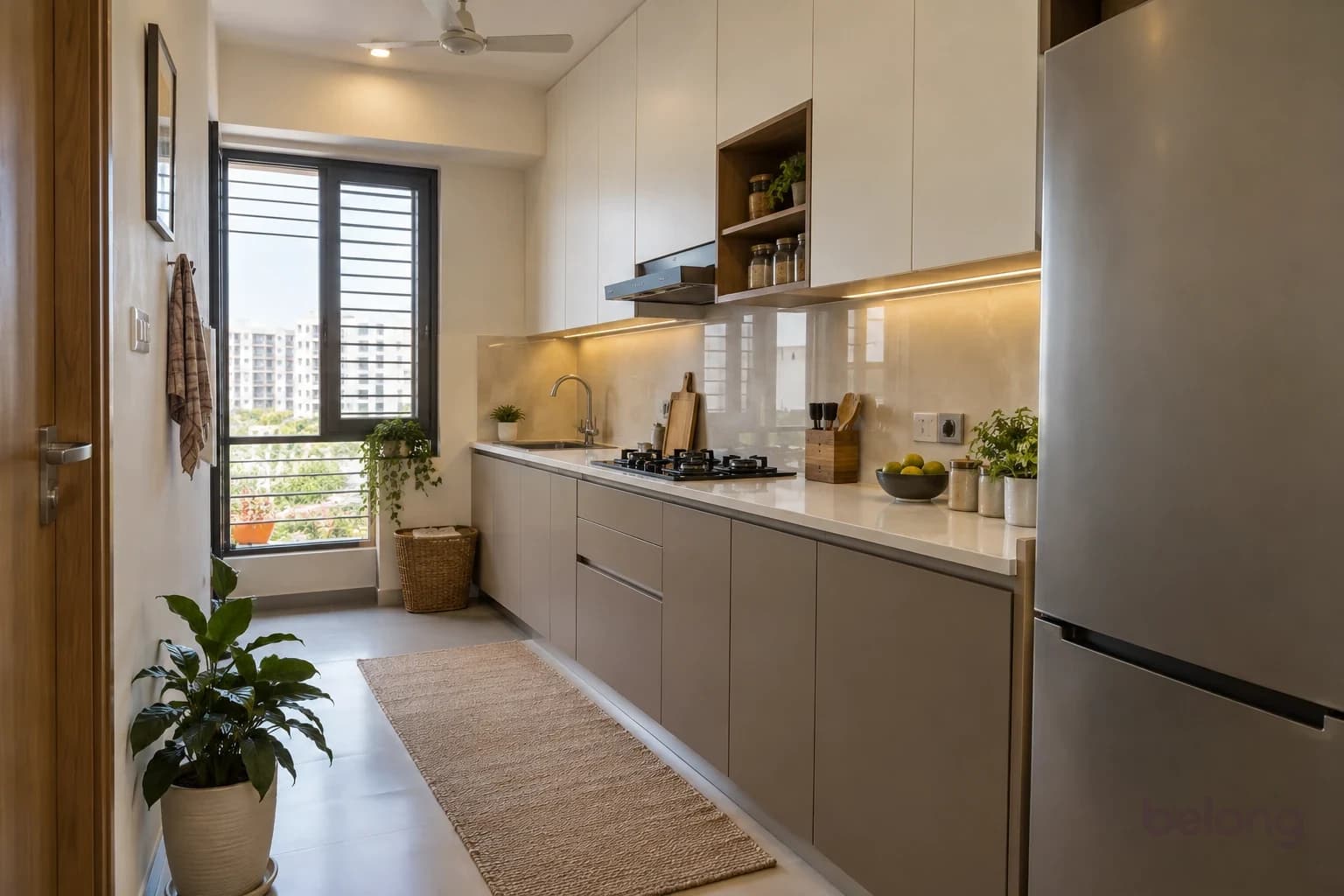
Clear the kitchen counter for good
The kitchen counter is where clutter builds fastest. The mixer grinder, the kettle, the toaster, the spice box, the water jug and the dish rack all want to live there, and soon there is no room left to roll a chapati.
An appliance garage helps. It is a counter-level cabinet with a lift-up or sliding shutter and a socket inside, so the mixer grinder can be used where it stands and hidden the moment you are done. Keep only what you use every day on the counter, and give everything else a cabinet.
The dish rack is the other counter hog. A drying rack inside the cabinet above the sink, or a tall pull-out beside it, frees a long stretch of worktop. Spices also sit more calmly in one drawer insert than in a row of jars along the backsplash.
Then sort vessels by how often they come out. Everyday steel plates, tumblers and the pressure cooker go in the drawers nearest the hob and sink. The big festival vessels, the extra dinner set and the biryani handi go up high, in the tall upper cabinets or the loft. Up high is perfectly fine for things you use a few times a year.
Warm minimalism, not a white box
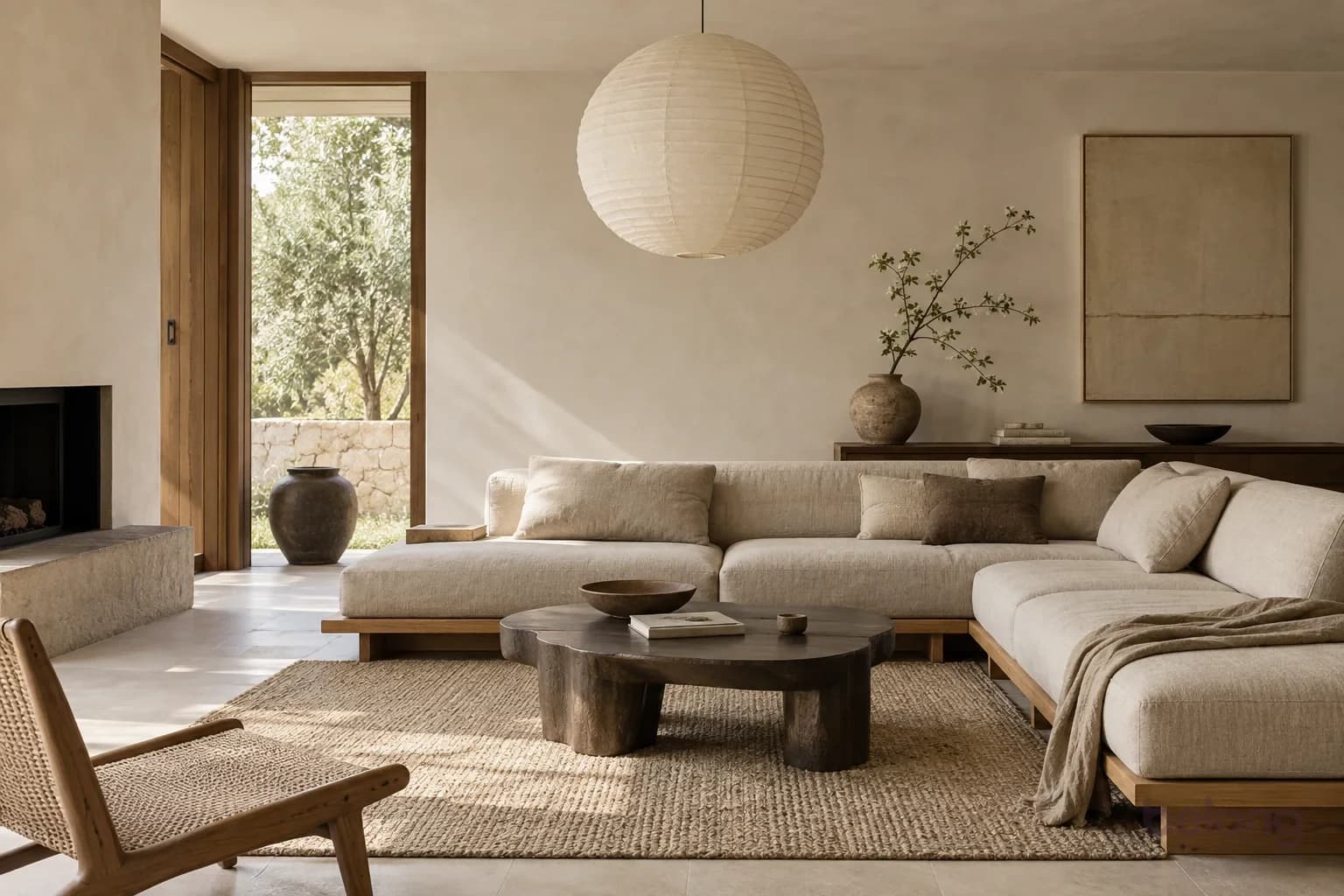
Cold minimalism is the version that gave the idea a bad name: white walls, grey floors, chrome and glass, nothing soft and nothing personal. It can look striking in a photograph and still feel like a waiting room when you come home tired.
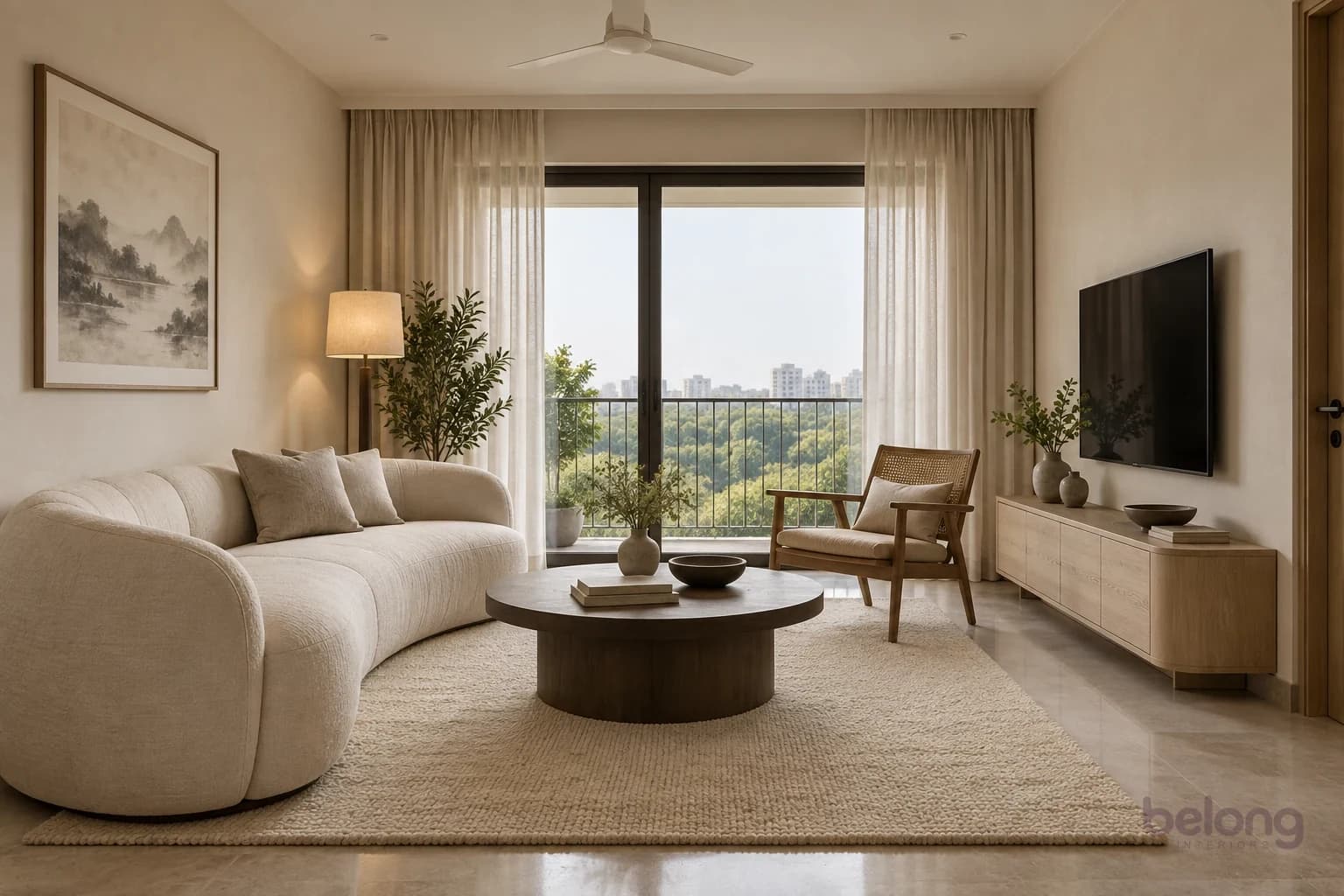
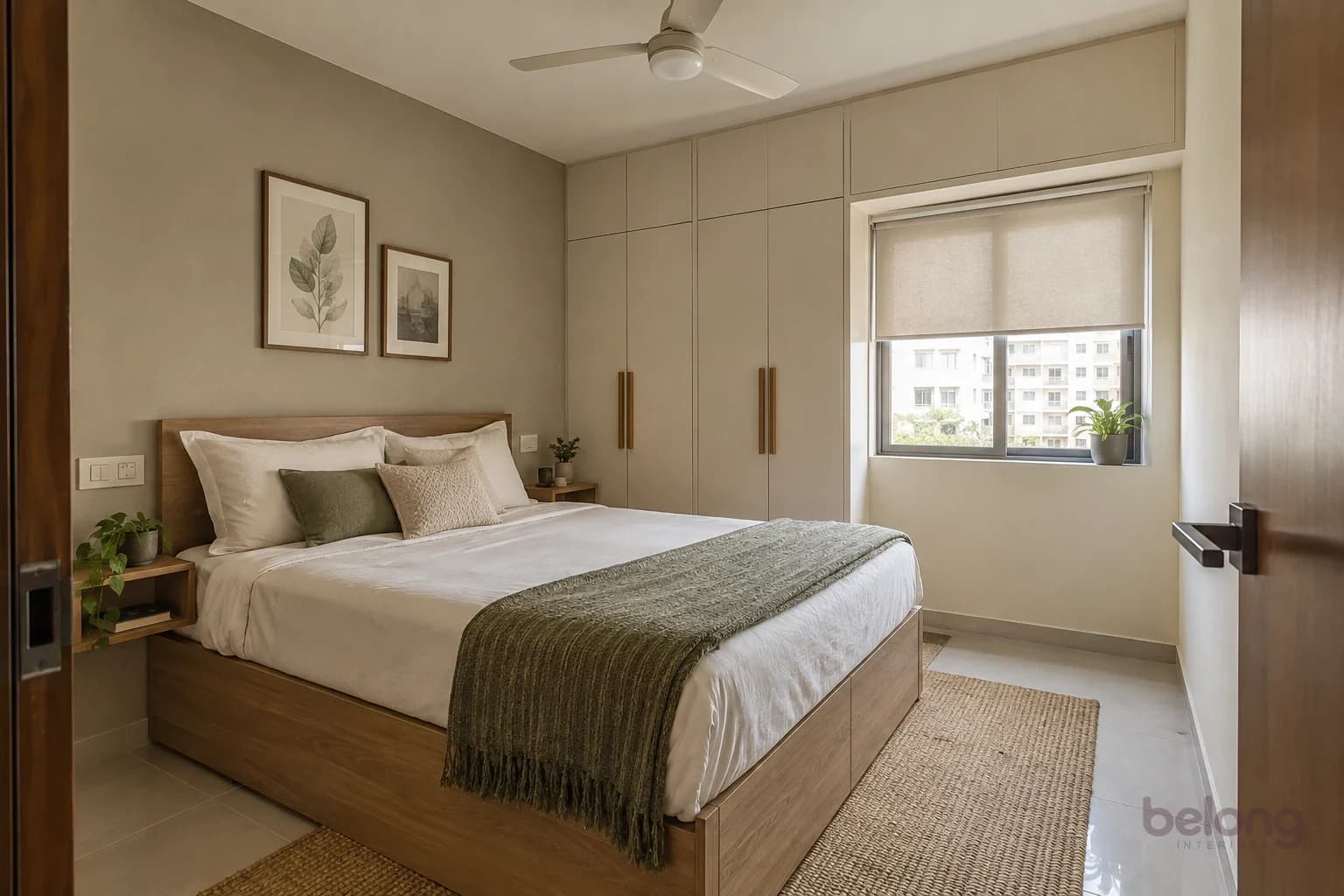
Warm minimalism keeps the restraint and changes the materials. Wood with a visible grain, linen and cotton that soften the light, cane and jute underfoot, a warm off-white or lime-washed wall. Texture does the work that ornaments used to do, so the room feels rich without being busy. Colour can stay soft too: clay, sand or a gentle sage on one wall still reads as calm.
Warmth comes from light, too. Cold rooms are often lit by one bright ceiling light, flat and white. Warm minimal rooms add a floor or table lamp with a warm white bulb, so evenings feel soft and the corners glow instead of glare.
Then add a few things you love and stop there. One artwork, a plant, a lamp that pools warm light low in the room. Give each one space around it, so it can actually be seen.
Cold minimal or warm minimal?
The same sofa, the same clear floor. Switch the mood and watch what materials, light and a few loved things do.
- MaterialsChrome, glass and grey tile.
- LightOne bright ceiling light, flat and white.
- LifeNothing soft, nothing personal.
Visual quiet: fewer materials, calmer fronts
A room can be perfectly tidy and still feel busy. Visual noise comes from too many materials, colours and lines competing at once: four wood tones, three handle styles, patterned tiles and loose wires all asking for attention. Calm comes from fewer contrasts, not from emptier rooms.
Choose a small palette and repeat it. Two or three materials, one main wood tone and a few colours from the same family. When wardrobe shutters match the wall colour, or fronts are handle-less with a simple groove, a whole wall of storage seems to step back.
Floors and ceilings count as well. One continuous floor finish through the home, rugs in calm solids or soft weaves, and a plain ceiling with simple lights all let the eye rest on the few things that matter.
Then hide the small things that pull the eye. Run television and router cables through a channel or a tray behind the unit, choose switch plates that blend with the wall where you can, and give chargers a drawer instead of the bedside table. Most of this is simple. It just needs deciding before the carpenter starts.
Small habits that keep a home clutter-free
Design gives things a home. Habits bring them back to it. A few small routines do more for a clutter-free home than any big weekend of decluttering, especially when everyone at home shares them, children included.
Try one in, one out: when a new kurta, toy or kitchen gadget arrives, something similar leaves. Try a ten-minute evening reset, where everyone puts back what they took out, the counter is wiped and the sofa is cleared before bed. And keep a maybe box. Anything you are unsure about goes in with a date on the lid, and if nobody has opened it by the next festival, you can let it go.
Seasonal swaps keep wardrobes and lofts honest. When the monsoon ends, raincoats and umbrellas go up and lighter cottons come down. Each swap is a natural moment to notice what nobody wore or used.
Make the habits easy rather than strict. A home where putting away takes seconds will stay calmer than one with firm rules and awkward cupboards.
Kids, paper, gifts and the things you cannot let go
Children bring a steady stream of toys, art and school papers. Give them low, open bins they can reach, sorted loosely by type, and try a rotation: some toys out, some in a box on a high shelf, swapped every few weeks so the old ones feel new again. A low shelf with a few baskets is easier for small hands than one deep toy box.
Paper needs one home, not five. A single drawer or file box with a folder for each person holds documents, bills and certificates, with a small tray for anything that needs action this week. Sort the post as it arrives, so the pile never gets a chance to form.
Festival things deserve a plan of their own. Lights, rangoli colours, decorations and special vessels can share one or two labelled boxes in the loft, packed together after the festival, so next year starts with one box instead of a search.
Gifts and sentimental things are the hardest. You do not have to keep everything to honour the person who gave it. Keep the pieces you love and display a few. Photograph the rest, or pass them on to someone who will use them. One memory box per person, with a lid, can hold the cards, drawings and small treasures without letting them take over the home.
Plan it into the design: measure what you own first
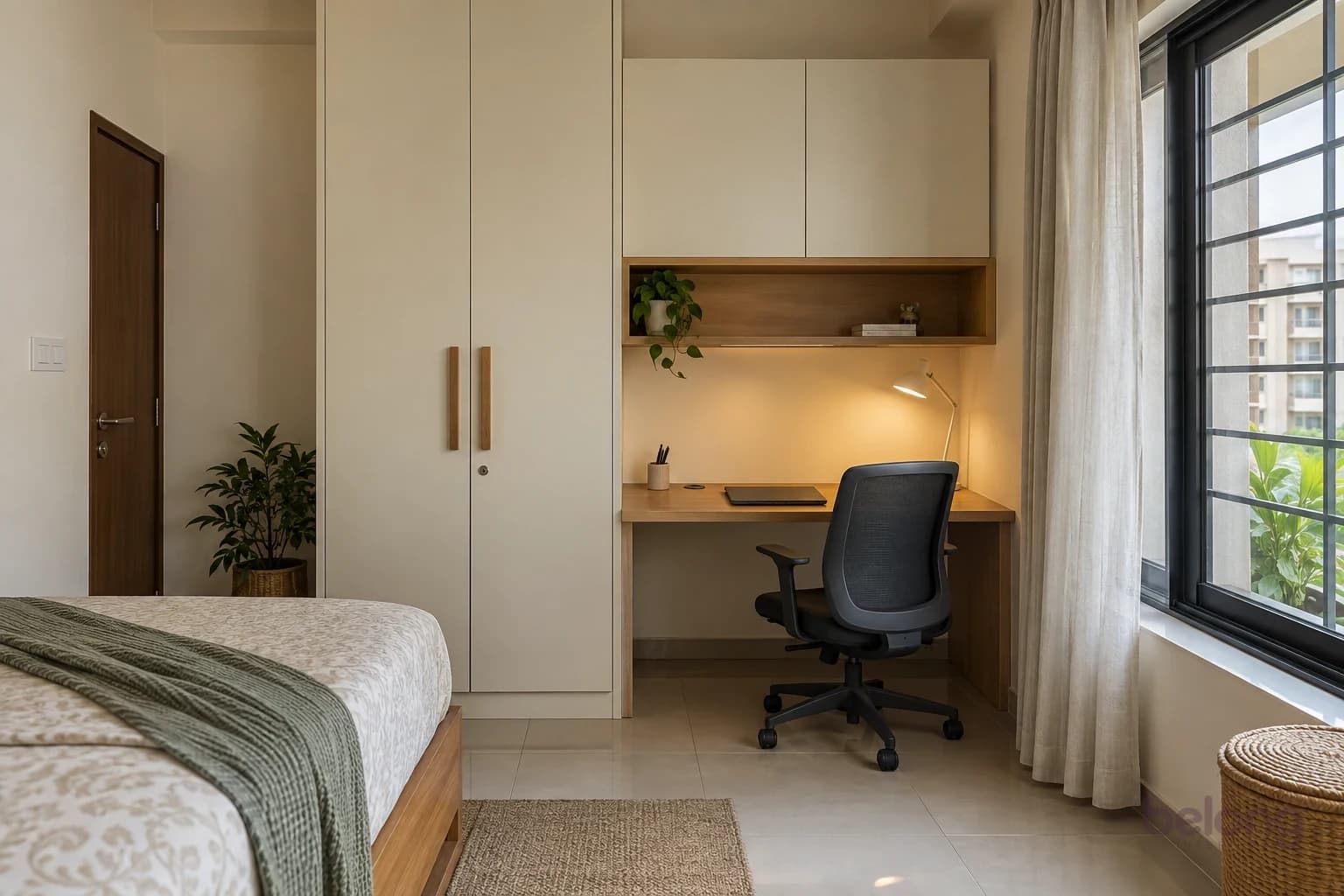
The calmest homes are planned around their belongings. Before anyone draws a wardrobe, make a list of what you own and where it gets used: how many pairs of shoes live at the door, how many suitcases you travel with, how much bedding comes out when relatives visit, and which appliances need the counter.
Then measure the awkward things. The tall pressure cooker, the mixer grinder with its jars, the folded guest mattress, the big suitcase that has to fit the loft. Joinery built around real sizes means things slide in easily, and storage that is easy to use is storage that gets used.
Think about the people as well as the things. Who can reach the top shelf, where a visiting grandparent’s medicines should sit, where a growing child will keep their own treasures. Storage that fits the family’s heights and habits is the kind that stays tidy.
Leave a little space empty, too. A home planned to be full on day one has nowhere for the next school year, the next wedding gift or the next hobby. If you are planning a new home, Belong can map this with you, room by room, before a single cabinet is made.
Where does it live?
Send everyday things to their best home in a typical flat, and keep the living room clear.
Mixer grinder , home: Kitchen, the appliance garage
A counter cabinet with a shutter and a socket: use it where it stands, then close it away.
1 of 10 have a home
Questions, answered
What is minimalist interior design?
Minimalist interior design keeps rooms calm by limiting how much the eye has to take in: fewer materials, clear surfaces and plenty of closed storage. It is not about owning nothing. It is about giving everything you keep an easy home, so the room can breathe.
How do I start decluttering my home?
Start small, and start where things arrive, usually the entrance or the kitchen counter. Clear one surface, decide a home for each thing that was on it and put things back there every evening. Once that zone stays calm, move on to the next.
How can a minimalist home still feel warm?
Use warm materials such as wood, linen, cane and jute, choose a soft off-white rather than a stark white, and add low, warm lamp light. Then display a few things you love, like one artwork or a plant, with space around them.
Which storage ideas reduce clutter the most?
Closed storage close to where things are used does the most work: a shoe cabinet at the door, an appliance garage on the kitchen counter, a drawer with a charging point by the bed and a loft for once-a-year things. Keep open shelves for a few loved pieces only.
Can a big family live in a minimalist home?
Yes, as long as the home is planned around what the family really owns. Measure belongings before the joinery is made, plan space for visiting relatives and festival things, and choose storage everyone can reach. Minimalism for a big family is about good systems, not empty rooms.
How do I keep my home clutter-free every day?
Keep the habits small: one in, one out, a ten-minute reset each evening and a dated maybe box for things you are unsure about. Seasonal swaps, such as after the monsoon, are a good moment to let go of what nobody used.
Every home is different. These notes are a starting point for your own brief, with the details shaped around your space and the people who use it.
Thinking of someone who’d like this?
Send it to the people you’re planning with, or keep it on your reading list.