Breezy Vastu. Light, air and calm for modern flats.
Many families love Vastu, and most flats arrive with the walls, windows and main door already decided. Breezy Vastu reads the tradition through what it does for light, air, easy movement and calm. Keep what matters to your family, and leave every wall exactly where it is.
What Breezy Vastu means for a flat
Vastu Shastra is a traditional Indian way of arranging buildings, and many families value it deeply. It is also a living tradition. Different schools, books and consultants often suggest slightly different things, so in this guide we say “commonly suggested” and leave room for your family’s own practice.
Breezy Vastu is our name for reading those suggestions through what they do in a home today. An entrance in the north or east tends to catch gentler light. An open centre keeps air and people moving. A quiet north-east corner gets soft morning sun. Seen this way, much of the tradition is simply good planning.
A flat adds one honest limit. You rarely choose its orientation, and you cannot move walls on a whim. So for each idea we share what tradition commonly suggests, why it often works, and what to do if your flat can’t follow it. We are interior designers, not Vastu consultants. If your family follows a consultant, bring their notes, and plan the interiors around them.
Find your flat’s directions first
Before you move anything, get to know your flat. Stand near the middle of the home with a phone compass, hold the phone flat and note which way the main door, the kitchen counter and each bedroom window face. Step away from steel almirahs, the fridge and big speakers, which can nudge the needle, and take the reading twice.
Then sketch a rough floor plan and divide it into a simple three-by-three grid: eight directions around the edge and the centre in the middle. Many simple Vastu guides work with a grid like this. It does not need to be precise. You are looking for patterns, not perfect lines.
Finally, watch the flat for a day. Where does the morning sun land? Which room warms up in the afternoon? Which pair of windows lets a breeze cross the home when both are open? These notes are the breezy half of Breezy Vastu, and they will shape every decision that follows.
Few flats line up neatly with north. If yours sits at an angle, use the nearest of the eight directions for each part of the plan. The compass a little further down turns in small steps, so you can match it to your own floor plan and see where each zone falls.
A home that is looked after feels calm, whichever way it faces.
Keep the centre open and let the breeze through
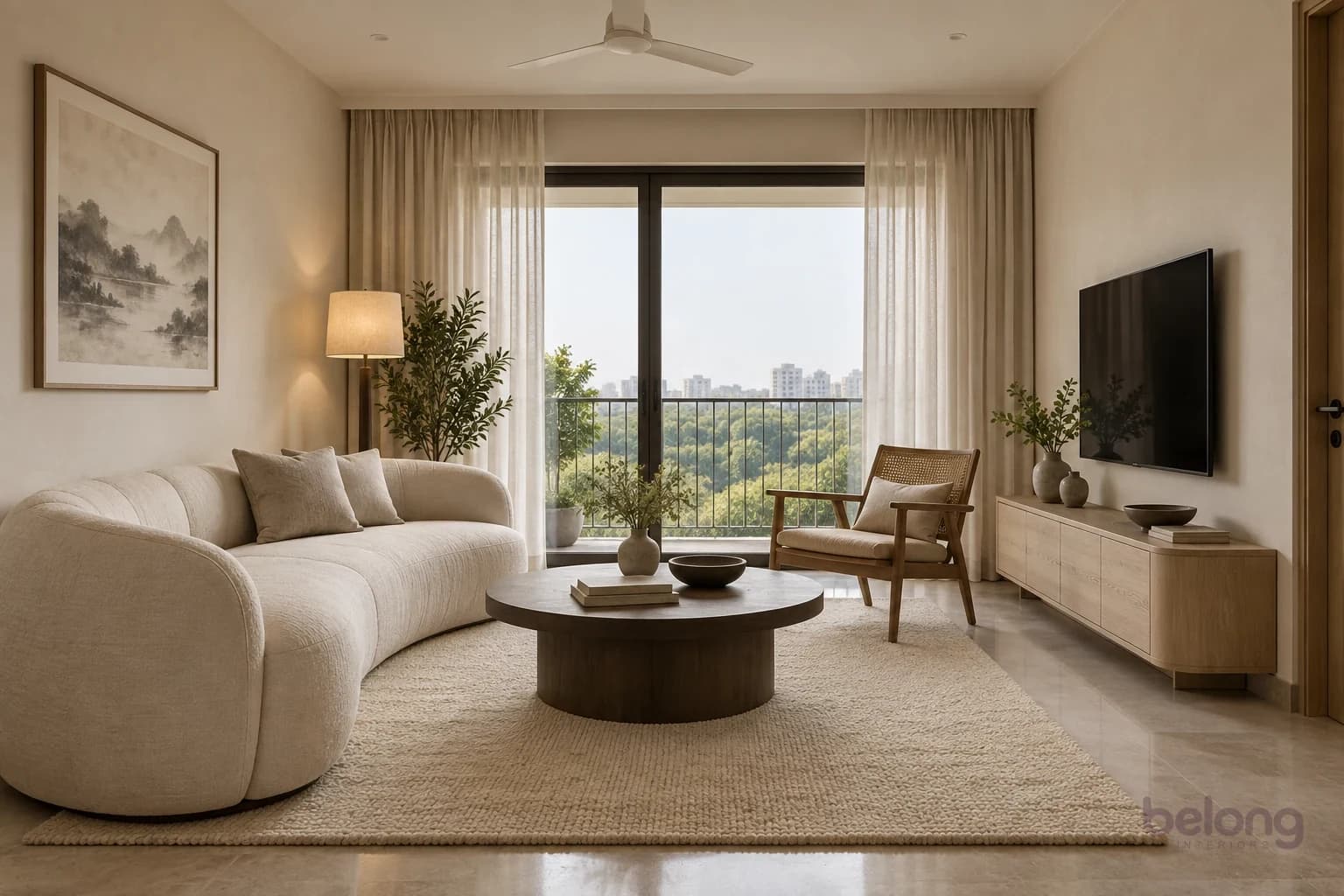
Traditional plans often treat the centre of the home, the brahmasthan, as a space to keep open and uncluttered. In a flat, the centre is usually the living and dining area where every route crosses. Keeping it clear makes the home easier to move through and lets daylight reach further.
So resist parking the spare almirah, the exercise cycle or the festival boxes in the middle of the home. A light rug, a low table and clear paths work better than a heavy cabinet. If the dining table has to sit near the centre, choose one that is easy to walk around.
The north-west is traditionally linked with air, and many guides suggest it for guest rooms, utility areas and balconies. Practically, a breezy corner is a happy place to dry clothes or keep the washing machine. Wherever your windows are, try opening two on opposite sides of the flat. A cross-breeze is the most Breezy Vastu thing a home can do.
The Breezy Vastu compass
Pick a room to see where it is commonly suggested, and why. Then turn the compass until the plan matches your own flat.
Top of the plan facesnorth
Entrancenorth, north-east or east
In this flat, the entrance sits in the north, just as commonly suggested.
- Tradition suggests
- A main door in the north, east or north-east.
- Why it works
- These sides often get gentler light, and a bright, uncluttered arrival sets the tone for the whole home.
- If your flat says no
- Let the door open fully, put shoes behind a cabinet door, add a warm light and keep the threshold clear.
Schools of Vastu differ. These are commonly suggested zones, offered as a starting point rather than a rule.
Vastu for the main door and entrance
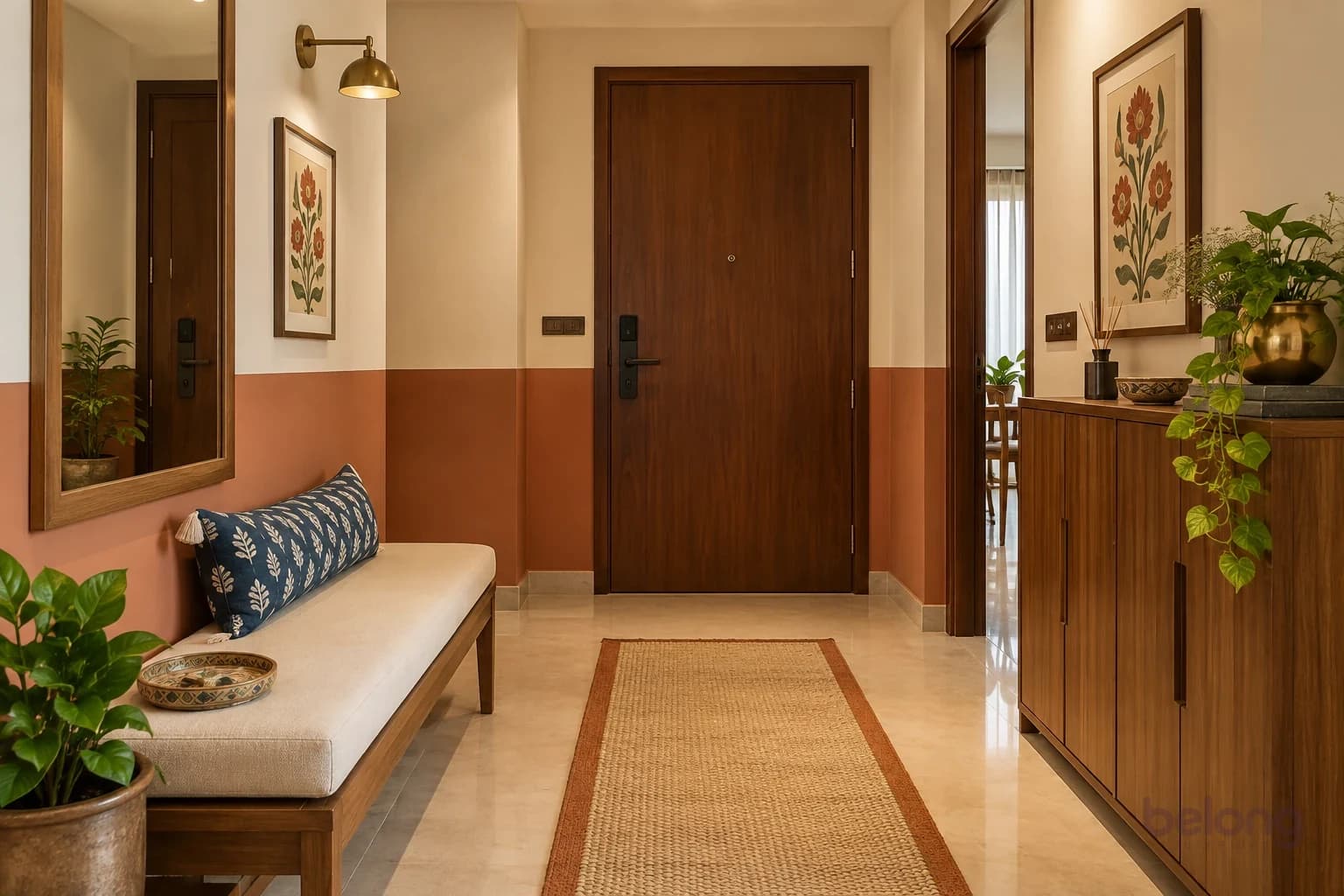
An entrance in the north, east or north-east is commonly suggested. In a flat you probably didn’t choose yours, and there is no need to worry if it faces another way. What the tradition asks of an entrance is a bright, clean and welcoming way in, and you can give that to any door.
Start with the door itself. It should open fully, without catching on a shoe rack or a heap of chappals. Fix the squeak and the sticky lock. Give shoes a closed cabinet, so the first thing you see is a calm wall rather than a pile. Add a warm light by the door for evenings, so nobody fumbles for keys.
Then make it feel like a greeting. A nameplate, a small plant if there is light, a toran or a rangoli on festival days, a hook for the keys. Many families keep the threshold clean and free of clutter. All of it says the same thing: you are home now.
If the main door opens straight into the living room, mark a small arrival zone instead of building a wall. A slim console, a washable rug or a slatted screen gives keys, bags and chappals a place to land, and keeps the view in a little softer.
Kitchen Vastu: morning light and fresh air
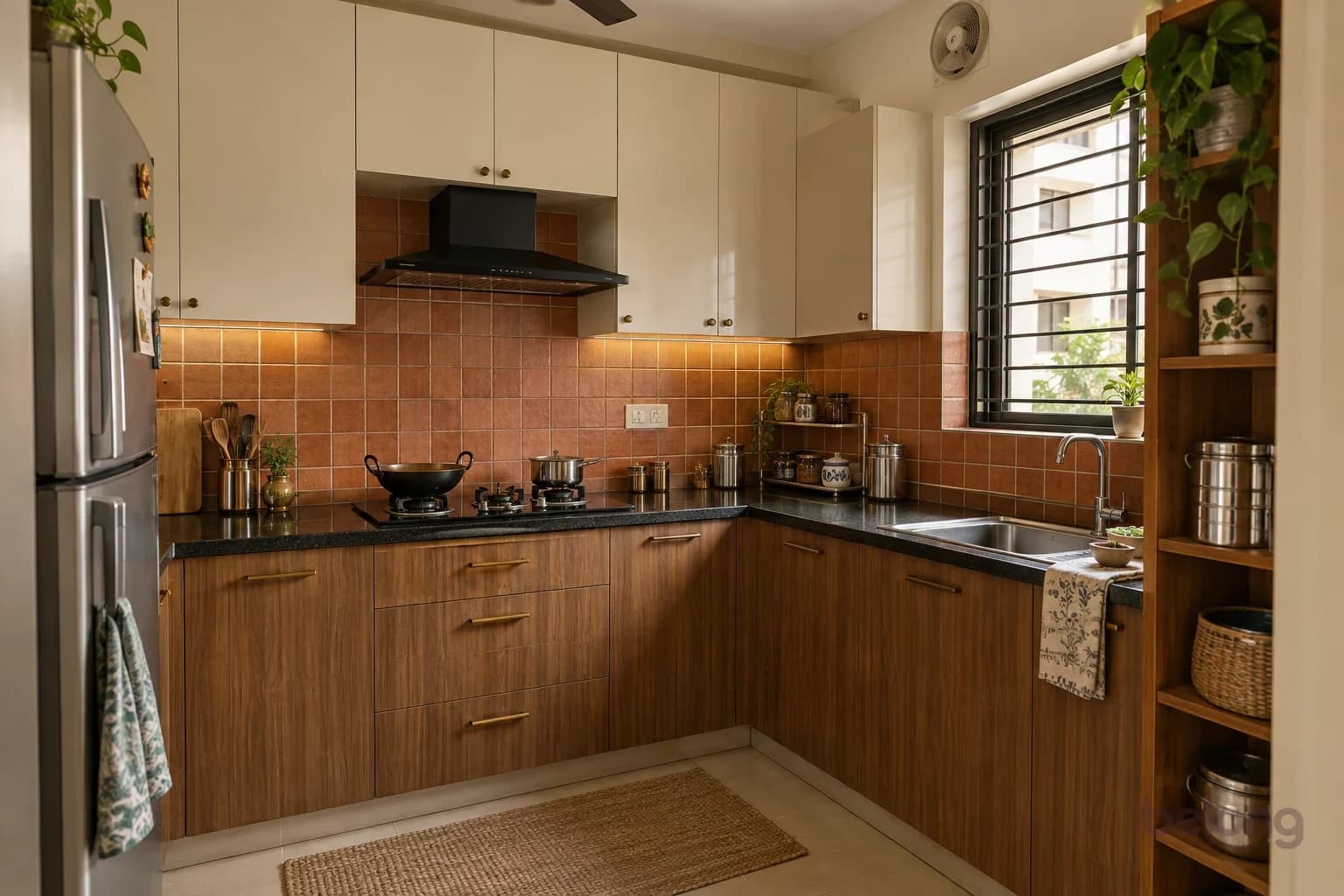
The south-east is traditionally linked with fire, so it is the zone most often suggested for the kitchen, with the north-west as a common second choice. Many guides also suggest cooking while facing east. In practice, that often means morning light falling on the counter while you work.
Read practically, this is about light, heat and air. A kitchen with morning sun and a steady breeze is pleasant to cook in. A chimney ducted to the outside, an exhaust fan and a window you can actually open do more for everyday comfort than any single direction.
If your kitchen sits elsewhere, keep the habits that travel. If the counter allows, turn the hob so the cook faces east; if it doesn’t, good light matters more. Many families like the stove and the sink a little apart, which also keeps splashes away from a hot pan. Add task lights under the cabinets and keep enough counter clear to work on.
Keep the heavy, everyday things low and close to where you use them: the pressure cooker, the steel dabbas, the mixer grinder. A tidy, well-lit kitchen is calmer to cook in, whichever corner it sits in.
Bedroom Vastu: a steady corner for sleep
The south-west is commonly suggested for the main bedroom, often described as the most stable part of the home. Heavier things, such as wardrobes and storage, are usually suggested along the south and west walls. Many families also prefer to sleep with their head towards the south or the east.
Read practically, this is a recipe for a restful room. The south-west corner is often away from the main door and the day’s comings and goings. West-facing walls tend to take the strongest afternoon sun, so a full wardrobe along them can act as a buffer and help the room feel cooler by bedtime.
If your bedroom faces another way, borrow the feeling. Put the bed against a solid wall, with room to walk on both sides, and avoid lining it up directly with the door. Many families move a mirror that faces the bed, since at night it can catch streetlight and movement. Keep the wardrobe on the warmer wall if you can, and line the curtains.
For children’s rooms, the west or north-west is often suggested, and many families like a study desk that faces east or north. Light from the north is steady and gentle for reading. Wherever the desk sits, let daylight come from the side, so the writing hand doesn’t throw a shadow across the page.
Worry or wisdom?
Six things families often fret about, each with a calmer, more practical read on the back.
0 of 6 turned over
Pooja room Vastu and the calm north-east
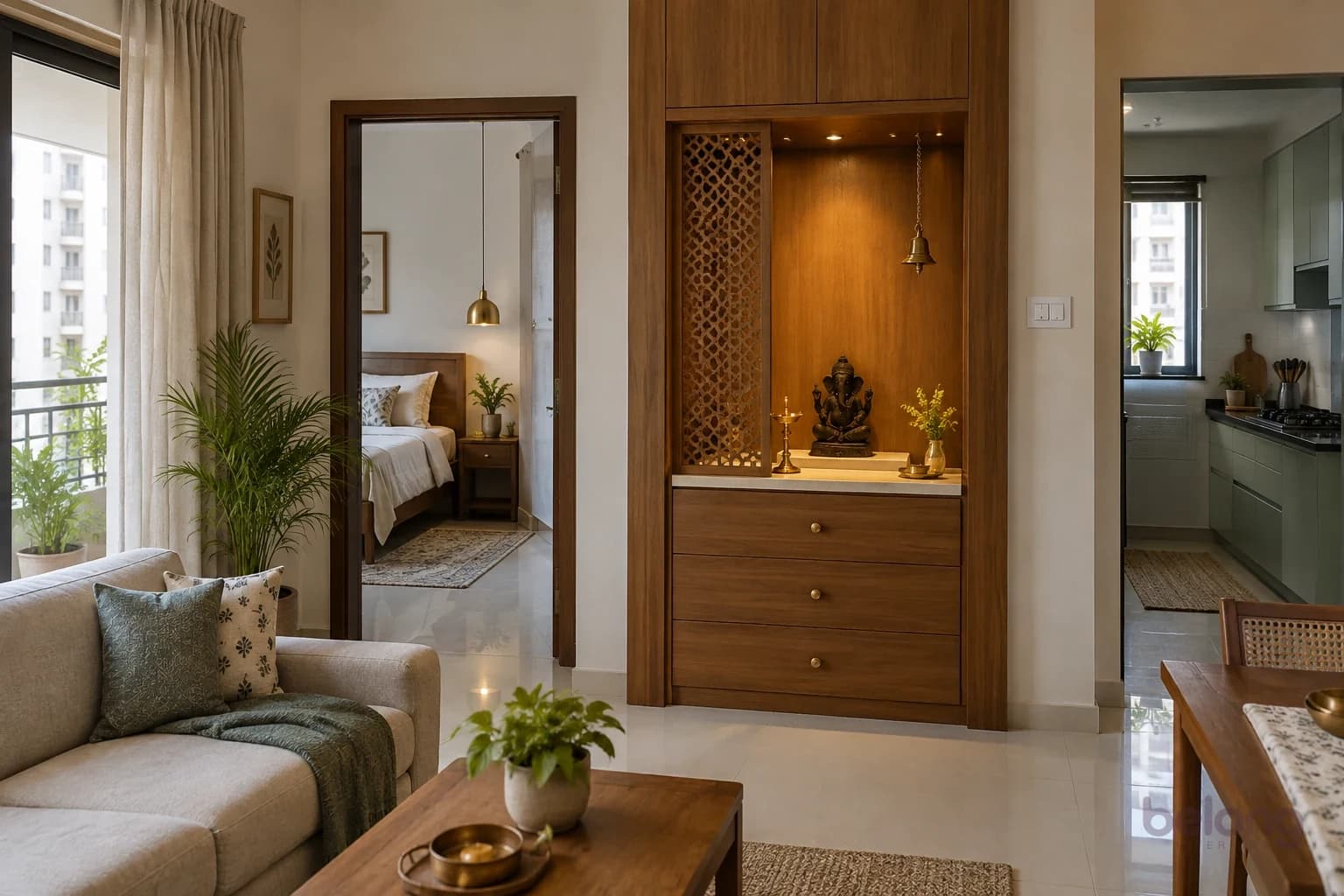
The north-east is commonly suggested for a pooja room or prayer corner, and for keeping things light and uncluttered. It tends to catch soft morning light, and in many flats it is a quieter corner, away from the kitchen and the main door. Many families also like to face east while they pray.
Most flats don’t have a separate pooja room, and they don’t need one. A wall-mounted unit, a niche in a cabinet or a simple shelf can hold a lamp, a bell and a few flowers. Keep it at a comfortable height, give the diya a stable, heat-safe surface away from curtains, and add a closed drawer below for matches, wicks and incense.
Toilets are commonly suggested away from the north-east and the centre of the home. If yours sits there, there is no need to worry. Keep it fresh, dry and closed with a good exhaust fan, and choose another bright, calm wall for the prayer corner. Many families avoid a pooja shelf on a wall shared with a toilet, which is also good sense about damp.
Vastu without demolition, even in a rented flat
Much of Vastu, as many families practise it, is about arrangement and care rather than construction. That is good news if you rent, or if you would rather skip weeks of dust. You can change where things sit, how light moves and how the home is looked after, and leave the walls exactly where they are.
Start with the small fixes that appear on most lists. Repair the dripping tap and the damp patch behind the almirah. Mend or let go of broken things: the stopped clock, the chipped mirror, the fan that wobbles. Clear the corners where clutter gathers, especially near the entrance and in the north-east.
Then work with light and air. Open windows on opposite sides in the morning. In rooms that need a breeze, swap heavy drapes for lined cotton curtains. Choose plants that suit the light you actually have: a tulsi on a sunny balcony, a hardy money plant in a shadier corner. A home that is looked after feels calm, whichever way it faces.
If you rent, choose pieces that move with you. A freestanding shoe cabinet, a pooja unit on its own little legs, a curtain on a tension rod and a lamp in place of new wiring all count. Ask your landlord before you drill, and keep the fixes you love for the next home.
Light the diya
Eight small fixes, no demolition and no drilling. Tick each one off and watch the little lamp come alive.
0 of 8 The wick is waiting. Tick a fix to light it.
Talking it through with family and your designer
Vastu is often a family conversation, and sometimes a tender one. Parents and grandparents may care about it deeply, while others in the home hold it more lightly. Start by asking what matters most to each person. Usually it comes down to a few things, such as the pooja corner, the head direction in the main bedroom or the position of the stove.
Write those down and share them with your designer early, before drawings begin. If your family follows a Vastu consultant, bring their notes or invite them to a meeting. It is far easier to plan a wardrobe around a preferred wall than to move it once it is built.
When views differ, look for the overlap. The bed can sit on a solid wall and still let you sleep with your head to the south. The pooja shelf can be in the north-east and also be the calmest spot in the flat. More often than not, the traditional answer and the practical one point the same way.
At Belong we plan interiors, not Vastu readings. What we can do is listen, place the things your family cares about with care, and make sure the home is bright, breezy and easy to live in. That is a kind of harmony everyone can agree on.
Questions, answered
Can a flat follow Vastu without demolition?
Yes, in most cases. Much of what families practise is about arrangement, light, air and care: where the bed sits, a clear entrance, a calm corner and leaks fixed promptly. Walls rarely need to move.
Which direction is best for the main door of a flat?
North, east and north-east entrances are commonly suggested, though schools of Vastu differ. In a flat you rarely get to choose, so focus on a bright, clutter-free entrance with a door that opens fully, good light and a closed place for shoes.
Is a south-facing flat bad according to Vastu?
A direction on its own doesn’t decide whether a home feels good. Plan for the stronger afternoon sun with shading, lined curtains and good cross-ventilation, then arrange the rooms inside thoughtfully.
Which direction should the kitchen be in, according to Vastu?
The south-east is most commonly suggested, with the north-west as a frequent alternative, and many guides suggest cooking while facing east. If your kitchen sits elsewhere, prioritise good light, a ducted chimney or exhaust fan and a clear counter.
Which direction should we sleep in, according to Vastu?
Sleeping with your head towards the south or the east is commonly suggested. Practically, place the bed against a solid wall, not directly in line with the door, with room to walk on both sides.
Where should the pooja corner go in a flat?
The north-east is commonly suggested, ideally a calm, bright spot where you can face east. If that isn’t possible, choose a clean, quiet wall that isn’t shared with a toilet, and give the lamp a stable, heat-safe surface.
Every home is different. These notes are a starting point for your own brief, with the details shaped around your space and the people who use it.
Thinking of someone who’d like this?
Send it to the people you’re planning with, or keep it on your reading list.